Blockchain technology is constantly evolving, and with that growth comes a greater need for reliable, real-world data. Smart contracts can automate powerful digital agreements, but they can’t access external information on their own.
That’s where Chainlink comes in. It acts like a trustworthy messenger between blockchains and real-world data. Chainlink delivers accurate data such as market prices, weather updates, sports results, and payment information directly onto the blockchain. This allows smart contracts to interact with real-world events and carry out meaningful, automated actions.
This guide will walk you through what Chainlink is, how it works, why it is important, and how it helps bridge the gap between blockchain technology and real-world data securely and reliably.
What is Chainlink?
Chainlink is a decentralized oracle network that connects smart contracts on blockchains with real-world data and systems. In simple terms, it acts as a secure bridge that allows blockchains to access information they can’t reach on their own. Information like financial market prices, weather data, sports results, or even traditional payment systems. To understand Chainlink’s appeal, let’s first look at how smart contracts work.
Smart contracts are pieces of code that automatically execute when certain conditions are met. However, they can only read data stored on their own blockchain. That’s a big limitation because most useful information, like exchange rates or supply chain updates, exists outside the blockchain.
To solve this issue, Chainlink uses independent oracle nodes, which are computers that fetch and verify data from different sources before sending it to the blockchain. By combining information from multiple oracles instead of relying on a single source, Chainlink ensures the data is accurate, reliable, and resistant to manipulation.
Think of it this way: without Chainlink, most smart contracts would remain cut off from the information they need to function. With it, they can interact with live data and power real-world use cases in decentralized finance (DeFi), insurance, gaming, and beyond.
In essence, Chainlink, as the oracle for smart contracts, enhances smart contracts by enabling them to interact with off-chain information in a secure and decentralized manner. It transforms them from isolated pieces of code into powerful, data-driven tools that can interact with real-world events and systems. This innovation paves the way for the next generation of decentralized applications.
Brief History of Chainlink
Chainlink’s origins trace back to 2017, a period when blockchain technology was rapidly gaining global recognition. Despite this growth, it was limited by its inability to access real-world data. Recognizing this gap, software engineers and entrepreneurs Sergey Nazarov and Steve Ellis set out to develop a secure and decentralized solution. They aimed to create a system capable of connecting blockchains to external sources of information.
In September 2017, Chainlink published its official whitepaper, introducing the concept of a decentralized oracle network. This paper outlined how independent oracles could work together to provide trustworthy data to smart contracts without relying on a single point of failure.
By 2019, Chainlink launched its mainnet on Ethereum, marking the start of real-world adoption. Soon after, it began powering data feeds for major DeFi platforms such as Aave, Synthetix, and Compound, quickly becoming the industry standard for price oracles.
Before launching Chainlink, Sergey Nazarov had already been involved in blockchain projects like SmartContract.com, which aimed to bring smart contract technology to mainstream use. Steve Ellis, on the other hand, brought technical expertise from his previous role at Pivotal Labs, a well-known software development firm. Together, they combined vision and technical depth to tackle one of blockchain’s biggest challenges.
How Does Chainlink Work?
To understand how Chainlink works, imagine it as the secure middle layer that connects on-chain smart contracts with off-chain data sources. By design, blockchains and closed systems. This means they cannot directly access external data or communicate with APIs — the interfaces that most online services use to share information.
Chainlink overcomes this limitation through a decentralized network of independent oracle nodes that fetch and verify real-world information before delivering it to the blockchain.
Here’s how the process works step by step:
A smart contract requests data. For example, a DeFi protocol might need the latest ETH/USD price to calculate lending rates. This request is sent to the Chainlink network.
Chainlink nodes respond. Independent oracle operators, known as nodes, retrieve the requested data from multiple off-chain sources such as APIs, financial data providers, or web servers.
Data is verified and aggregated. Once collected, Chainlink’s system compares and aggregates the responses from different nodes to eliminate errors or manipulation. The final, agreed-upon value is then sent back to the blockchain.
The smart contract executes automatically. With the verified data in place, the smart contract can now operate as intended. For instance, it might trigger a trade, update an interest rate, or process an insurance payout.
Through this process, Chainlink ensures that smart contracts operate with real-time, accurate, and tamper-resistant information. It transforms blockchain code into something far more capable. The system can now react to real-world events, fully trusting the data it receives.
Architecture and Technical Components
Chainlink’s architecture is designed around security, decentralization, and transparency. Every part of its network works together to guarantee that data delivered to smart contracts is reliable and resistant to manipulation. Below are the key components that make this possible:
Data Sources: Chainlink pulls data from multiple external providers such as financial APIs, weather data platforms, or enterprise systems. Using diverse and independent data sources ensures that no single point of failure can corrupt the information being delivered to the blockchain.
Node Operators: Node operators are the backbone of the Chainlink network. These are independent entities that run Chainlink software, connect to APIs, and deliver requested data to smart contracts. They are rewarded in LINK for their services. Reliable performance, uptime, and data accuracy are crucial for maintaining their reputation and earning potential.
Aggregation Contracts: To ensure accuracy, Chainlink uses aggregation contracts on-chain. These smart contracts collect all responses from participating nodes, compare the results, and compute a single, trustworthy data point. This final value is what smart contracts rely on for execution.
Reputation System: Trust is essential in a decentralized network. Chainlink employs a reputation system that tracks each node’s performance over time. Nodes that consistently deliver high-quality, accurate data gain better rankings and more opportunities to fulfil data requests. On the other hand, unreliable ones can be filtered out.
Decentralized Oracle Networks (DONs): Instead of depending on a single oracle, Chainlink operates through multiple decentralized oracle networks (DONs). Each DON is composed of several independent, trusted nodes that work together to fetch, verify, and deliver data. This structure greatly reduces the risk of manipulation or downtime and ensures data remains reliable, even if individual nodes fail.
Key Features of Chainlink
Decentralization: Chainlink uses a network of independent oracle nodes rather than relying on a single source of data. This ensures that information delivered to smart contracts is secure, tamper-resistant, and reliable.
Security: With cryptographic verification, aggregation of multiple data sources, and Decentralized Oracle Networks (DONs), Chainlink ensures that data fed to smart contracts is accurate and resistant to manipulation.
Multi-Chain Compatibility: Chainlink supports multiple blockchains, enabling seamless integration of its oracles and data feeds across different networks. This allows developers to build interoperable, cross-chain decentralized applications.
Real-World Data Access: Through its oracles, Chainlink connects smart contracts to APIs, Web2 data, IoT devices, and other off-chain information, expanding the practical use cases for blockchain technology.
Advanced Features: Chainlink provides advanced tools that enhance smart contracts, enabling complex computations, secure randomness, cross-chain communication, and efficient data delivery. These features operate while maintaining security and decentralization.
Transparency Tools: Chainlink places a strong emphasis on transparency and security. Therefore, it uses public reputation systems, node performance metrics, and decentralized governance to maintain trust across its network. Each data feed is fully auditable, allowing anyone to verify where the information came from and how it was validated.
Chainlink Services and Products
Over the years, Chainlink has grown beyond being just a data provider. It now offers a full suite of services and products designed to make smart contracts more reliable, flexible, and connected to the real world.
These tools empower developers, businesses, and institutions to build applications that respond to live data, automate complex tasks, and interact across multiple blockchains. Below are the main services and products that define Chainlink’s ecosystem.
Decentralized Data Feeds
At the heart of Chainlink’s success are its decentralized data feeds, which provide reliable price and market information to DeFi platforms. By aggregating inputs from multiple independent oracles and trusted data providers, Chainlink ensures that the data delivered on-chain is accurate, transparent, and resistant to manipulation.
Data Feeds help smart contracts make decisions based on reliable market information rather than single, potentially biased data points. For example, a DeFi lending platform like Aave uses Chainlink Data Feeds to track live asset prices. If the value of collateral drops below a threshold, the platform can automatically liquidate positions — protecting users and keeping the protocol stable.
Chainlink VRF (Verifiable Random Function)
The Chainlink VRF provides secure and provably fair randomness to smart contracts. This is something traditional blockchains cannot generate on their own. This feature is especially useful in gaming, NFTs, and lotteries, where unpredictable and tamper-proof outcomes are essential.
Unlike traditional random number generators, VRF delivers cryptographic proof that each random result is authentic and unmanipulated, even by the oracle providing it. This builds trust and transparency for users and developers alike.
Chainlink Automation (formerly Keepers)
Chainlink Automation allows smart contracts to run automatically based on preset conditions. Instead of relying on manual triggers, this service ensures that critical operations happen on time and without human intervention.
For example, a DeFi platform can automatically rebalance portfolios or execute trades when specific market thresholds are reached. This reduces gas costs, saves time, and ensures that decentralized applications operate smoothly around the clock.
Chainlink CCIP (Cross-Chain Interoperability Protocol)
The CCIP enables secure communication and token transfers between different blockchains. This addresses one of the biggest challenges in crypto: interoperability.
CCIP leverages Chainlink’s decentralized oracle infrastructure to ensure that messages and assets transfer securely between blockchains. As a result, it enables cross-chain DeFi applications, multi-chain NFTs, and enterprise integrations across multiple networks.
Chainlink Proof of Reserve (PoR)
The Proof of Reserve service gives on-chain transparency into off-chain asset holdings. It’s especially valuable for stablecoins, wrapped tokens, and reserve-backed financial products.
By providing regular, verified updates about reserves, Chainlink PoR helps ensure that assets like stablecoins or tokenized real-world assets are fully backed. This increases trust and accountability in the digital asset space.
Chainlink Functions
Chainlink Functions is a feature that lets developers connect smart contracts directly to any external API or off-chain computation. This means applications can securely access data like stock prices, IoT sensor readings, or Web2 services. It does all of this while preserving the blockchain’s transparency and trust.
In short, Chainlink Functions make smart contracts as flexible as modern web applications.
Off-Chain Reporting (OCR)
To make the network more efficient, Chainlink implemented Off-Chain Reporting (OCR). With OCR, oracles reach a consensus off-chain before submitting a single, aggregated update to the blockchain.
This innovation helps reduce gas fees and network congestion, making data delivery faster and more cost-effective without compromising security or accuracy.
Chainlink Data Streams
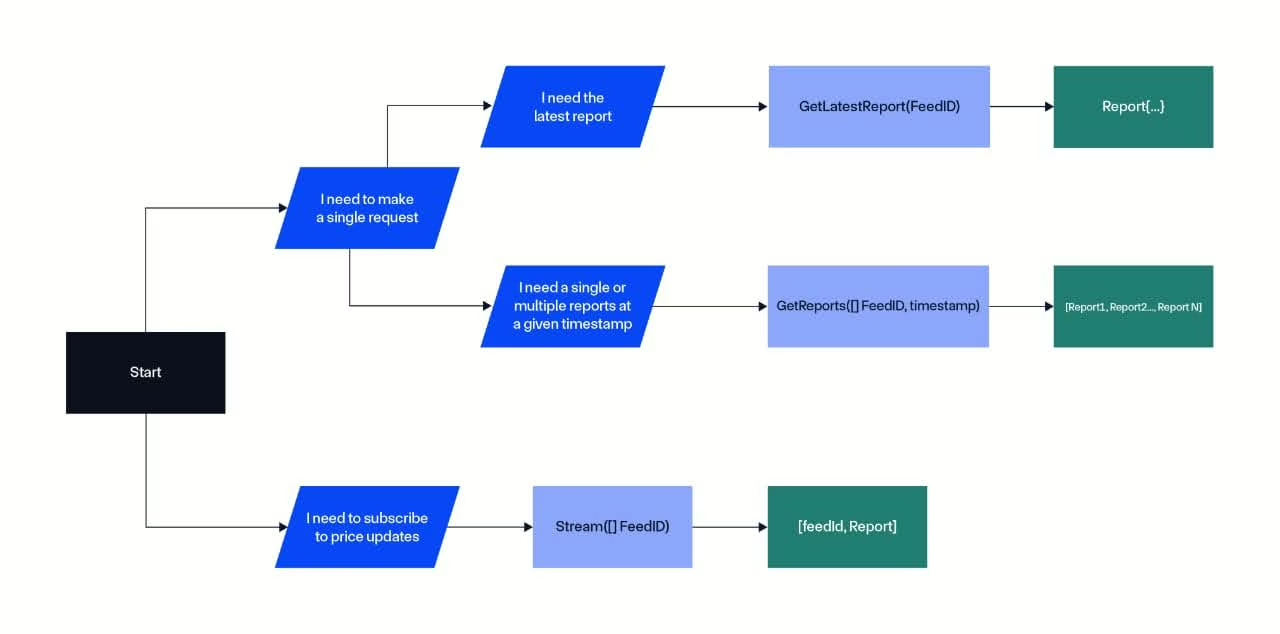
Chainlink Data Streams provide high-frequency, low-latency market data to on-chain applications. This capability is especially important for trading platforms, derivatives, and prediction markets that require real-time updates. By combining speed, accuracy, and decentralization, Data Streams support use cases that demand instant, trustworthy data delivery.
For instance, a decentralized exchange can use Chainlink Data Streams to fetch verified, real-time ETH/USD prices every second. This ensures that trades execute at accurate market rates and protects users from outdated or manipulated data.
The LINK Token
LINK is the native cryptocurrency of the Chainlink network. It’s the fuel that keeps Chainlink’s decentralized oracle network running smoothly and securely. LINK is an ERC-677 token, an extension of the popular ERC-20 standard that offers additional functionality. So, the LINK token is highly compatible with Ethereum-based smart contracts and decentralized applications.
The token has a fixed total supply of 1 billion LINK, with a market capitalization of approximately $12 billion as of late 2025. The initial distribution allocated 35% to the public sale, 30% to the development team, and 35% to ecosystem incentives, including node operator rewards. As of late 2025, roughly 696 million LINK are in circulation, with the remainder held in reserve to support future network growth.
LINK Token Use Cases
Paying Oracle Nodes for Data Services
One of the primary uses of the LINK token is to pay oracle node operators for providing data, running computations, and delivering verified information to smart contracts.
This payment model creates a market-driven ecosystem where data providers compete to offer high-quality, timely, and accurate information. The better a node’s performance, the more it earns in LINK.
Securing the Network Through Staking
Chainlink uses staking of LINK to secure its decentralized oracle network. Node operators are required to lock up LINK as collateral, which can be forfeited if they act maliciously or provide inaccurate data.
This system incentivizes honest behavior, strengthens network security, and ensures that smart contracts receive reliable, tamper-resistant information.
Integration Across DeFi and Enterprise Platforms
The token is used across DeFi protocols and enterprise systems to pay for Chainlink’s oracle services. DeFi platforms rely on LINK to access real-time price feeds, lending rates, and market data. Enterprises use LINK to connect smart contracts with off-chain resources like databases and payment systems. In both cases, LINK facilitates secure, reliable, and decentralized access to real-world information.
Collateral for Advanced Features
LINK is required to access Chainlink’s premium services, including Verifiable Random Function (VRF), Chainlink Functions, and the Cross-Chain Interoperability Protocol (CCIP). It pays and incentivizes node operators, ensuring secure and decentralized execution.
Chainlink Staking
Chainlink staking allows LINK token holders to help secure the network while earning rewards. By locking up (or “staking”) their LINK, participants support the reliability of Chainlink’s oracle services, which deliver trusted data to smart contracts.
When node operators perform their duties honestly and accurately, they earn LINK rewards. Conversely, if they provide false or unreliable data, a portion of their staked LINK can be forfeited. This mechanism promotes accuracy, strengthens network security, and encourages active participation within the Chainlink ecosystem.
Staking also plays a vital role in improving the reliability of Chainlink’s data feeds and other services. By requiring node operators to have “skin in the game,” the network ensures that only committed and trustworthy participants are responsible for delivering data.
Moreover, as the Chainlink staking program evolves, it has expanded to include community staking, allowing regular LINK holders to delegate their tokens to reputable node operators. This broadens participation, decentralizes control, and increases the total amount of LINK securing the network.
In essence, the more LINK that is staked, the more secure and resilient the network becomes, since attackers would need to risk significant capital to attempt any form of manipulation.
Ecosystem and Integrations
Chainlink has built one of the largest and most active ecosystems in the blockchain industry. It was designed to be blockchain-agnostic, meaning it can operate on any network that supports smart contracts. This flexibility allows the network to provide reliable data and services across multiple chains, not just Ethereum.
Currently, Chainlink oracle services are integrated across a wide range of major blockchains, including Ethereum, BNB Chain, Polygon, Avalanche, and Arbitrum, enabling secure and consistent data sharing across networks.
Thanks to its comprehensive suite of decentralized services, the ecosystem brings together developers, node operators, data providers, and partner protocols, all of whom contribute to making blockchain applications more reliable and connected to the real world.
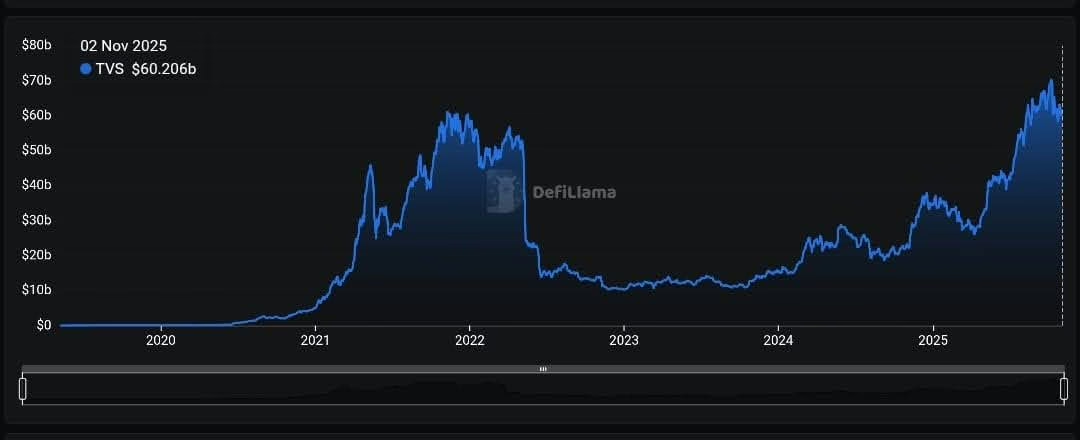
Moreover, Chainlink’s oracle services support billions of dollars in Total Value Secured (TVS) across the DeFi ecosystem. This figure represents the cumulative on-chain value that depends on Chainlink’s data for accuracy and reliability. According to data from DeFiLlama, Chainlink currently secures over $60 billion in value. This figure highlights its critical role as a trusted data layer for decentralized finance.
Real-World Use Cases and Success Stories
In the DeFi space, Chainlink powers major protocols such as Aave, Synthetix, and Uniswap by providing reliable price feeds and real-time market data. These integrations allow DeFi applications to operate securely with accurate information, supporting functions like lending, trading, and yield generation. They have also helped prevent price manipulation and liquidation errors, making DeFi markets more stable and transparent.
Chainlink’s technology has also caught the attention of traditional enterprises and financial institutions exploring blockchain integration. Through partnerships and pilot programs, Chainlink has collaborated with organizations such as SWIFT, Accenture, and Google Cloud. These collaborations aim to bridge the gap between existing financial systems and decentralized networks.
An example is the SWIFT–Chainlink collaboration, where Chainlink’s Cross-Chain Interoperability Protocol (CCIP) is used to enable secure communication between traditional banking infrastructure and multiple blockchains. This innovation could pave the way for tokenized assets, cross-border settlements, and institutional DeFi adoption.
In insurance, Chainlink oracles provide verified weather and flight data to automate payouts for parametric insurance products. For example, Arbol uses Chainlink to settle climate insurance claims instantly when predefined weather conditions are met, reducing administrative costs and delays.
The gaming and NFT sector utilizes Chainlink’s Verifiable Random Function (VRF) to ensure provably fair randomness for projects such as Axie Infinity and Moonbeam-based games. This randomness helps determine features such as loot drops or character traits. This fosters player trust by ensuring that game outcomes are transparent and immune to manipulation, even from developers.
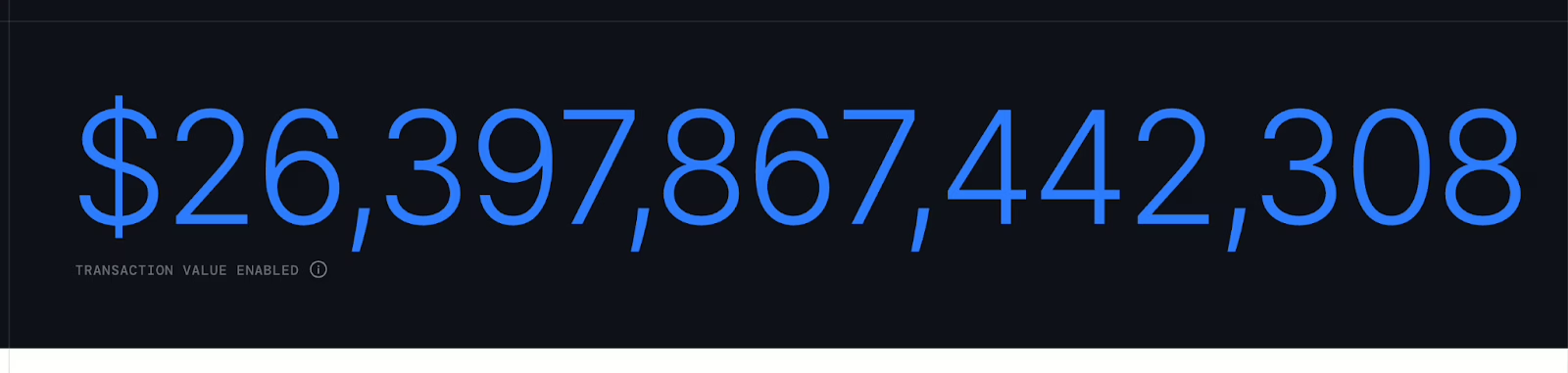
In all, Chainlink has enabled over $26 trillion worth of transactions. This is calculated by totalling the total amount in USD for transactions involving a Chainlink Oracle.
Governance and Community
Chainlink’s governance and community play a vital role in shaping the network’s long-term growth and security. Rather than being controlled by a single entity, Chainlink is guided by a decentralized ecosystem of participants. This includes node operators, developers, researchers, and LINK token holders who collectively contribute to its development.
Node operators play a vital role in Chainlink’s ecosystem. They maintain the oracle network by delivering reliable data and securing it through staking. Developers expand the ecosystem by building tools, integrations, and new use cases powered by Chainlink’s technology. Meanwhile, the broader community contributes through feedback, education, and participation in initiatives like community staking.
As Chainlink evolves, governance is gradually becoming more decentralized, with plans for on-chain voting mechanisms that allow LINK holders to have a direct voice in protocol upgrades and policy decisions. This collective participation ensures that the network continues to grow in a transparent, secure, and community-driven way.
Strengths, Weaknesses, and Risks
Like any major blockchain project, Chainlink combines some powerful advantages with a few real-world challenges. Understanding both sides of the equation is essential for assessing Chainlink’s long-term potential and sustainability. Let’s take a look:
Strengths
- Highly reliable and decentralized oracle network trusted across major DeFi and enterprise platforms.
- Delivers accurate, tamper-resistant data feeds that enhance smart contract functionality.
- Supports advanced features like VRF, CCIP, and Data Streams for cross-chain and real-time use cases.
- Backed by a strong community, developer ecosystem, and proven security record.
Weaknesses
- Relies on node operators, which introduces some dependency on external performance.
- Complex infrastructure can slow scaling and upgrades.
- Integration costs and technical requirements may limit smaller projects.
Risks
- Faces increasing competition from newer oracle and interoperability providers.
- Dependent on blockchain adoption and demand for off-chain data.
- Market volatility and regulatory uncertainty could affect network growth and token value.
Future Roadmap and Vision
Chainlink continues to evolve with a focus on expanding its core services and deepening its role in the Web3 ecosystem. One major area of growth is the Cross-Chain Interoperability Protocol (CCIP), which aims to connect multiple blockchains and make cross-chain communication seamless and secure. This expansion is key to building a more connected, multi-chain future.
Another priority is the current development of Chainlink Staking. Future versions are expected to improve reward systems, increase participation limits, and strengthen network security through community involvement.
Additionally, the network is also working to enhance its data delivery and automation services, such as Data Streams and Chainlink Functions. These improvements will enable developers to build faster and more dynamic decentralized applications.
In the long run, Chainlink seeks to become the standard data and interoperability layer for Web3. Its goal is to power secure connections between blockchain networks and the real world, from finance and supply chains to gaming and global enterprise systems.
Where to Buy LINK
The LINK token is available for trading on different centralised and decentralized exchanges. LINK/USDT is the most popular trading pair across these exchanges. Here’s a list of some exchanges where traders can purchase the token:
CEX
- Binance
- Coinbase
- Kraken
- KuCoin
- OKX
DEX
- Uniswap (Ethereum)
- PancakeSwap (BNB Chain)
- SushiSwap
After buying LINK, it’s important to store it safely. As an ERC-20 token, LINK is compatible with any Ethereum-based wallet, including MetaMask, Trust Wallet, and Ledger hardware wallets.
Additionally, hardware wallets are considered the most secure option for long-term storage, as they keep your private keys offline and away from potential online threats. Popular choices include Ledger and Trezor, both of which offer strong protection against hacking and malware.
Tips for Safeguarding Your Assets
- Always enable two-factor authentication (2FA) on your exchange accounts.
- Avoid keeping large amounts of LINK on centralized exchanges for extended periods. Moving your tokens to a personal wallet ensures you maintain full control over your holdings.
- Back up your seed phrase and store it somewhere safe and offline.
- Never share your private keys or recovery phrases with anyone.
- Double-check websites and wallet apps to avoid scams or fake versions.
Where to Sell LINK
You can sell your LINK on most of the same exchanges where you can buy them, such as Binance, Coinbase, Kraken, and KuCoin. Availability may vary depending on your country and local regulations. You can follow this simple process:
- Deposit your LINK into your exchange wallet if it’s not already there.
- Trade LINK for USDT, BTC, or fiat currency (like USD or EUR), depending on what trading pairs your exchange offers.
- Withdraw your funds to your bank account or move your crypto to an external wallet for safekeeping.
If you prefer a DEX, you can also swap LINK for other tokens directly from your wallet using Uniswap, SushiSwap, or 1inch. Just make sure you have enough of the network’s native token, such as ETH on Ethereum, to cover gas fees.
Good Practices When Selling LINK
When selling LINK, it’s important to plan your transactions carefully to get the best value and avoid unnecessary costs.
Compare fees: Different exchanges charge varying trading and withdrawal fees. Check these before selling to maximize your returns.
Use limit orders: Instead of selling at the market price, you can set a limit order to sell LINK at a preferred price. This will help you avoid sudden price swings.
Check network options: When you’re withdrawing LINK to another wallet or exchange, always confirm you’re using the correct network (for example, Ethereum or BNB Chain) to prevent loss of funds.
Be cautious with timing: Crypto prices can change quickly. Monitor the market and sell when prices align with your goals.
Secure your funds: After selling, transfer your fiat or crypto proceeds to a secure account or personal wallet instead of leaving them on the exchange long-term.
What is the Price Prediction for Chainlink?
At the time of writing, LINK trades at $17.19, representing a 51.5% increase over the year. The current market price also reflects an 11,520.45% increase above its lowest price of $0.1482. However, the value represents a 67.32% drop from its all-time high of $52.70.
In line with this performance, analysts remain optimistic about the token, citing its growing role in connecting smart contracts to real-world data. According to experts, LINK could trade at an average price of $21.54 in 2026. In 2027, the market value is expected to reach a high of $47.25 if bullish trends continue. However, like all digital assets, its price remains sensitive to market cycles, competition, and macroeconomic shifts.
Frequently Asked Questions
Who founded Chainlink (LINK)?
Chainlink was founded in 2017 by Sergey Nazarov and Steve Ellis.
What is Chainlink’s all-time high?
LINK reached an all-time high of about $52.70 in May 2021.
What is LINK token’s maximum supply?
The maximum supply of LINK is 1 billion tokens, used for staking, rewards, and ecosystem growth.
Is Chainlink (LINK) a good investment?
Chainlink has strong real-world use and adoption, making it an appealing investment for long-term investors. However, it remains subject to market volatility, so thorough research and risk management are key.
What blockchain is Chainlink on?
Chainlink runs primarily on Ethereum but now supports multiple blockchains through its CCIP protocol.
Conclusion
Chainlink has firmly established itself as a cornerstone of blockchain infrastructure. It plays a crucial role in connecting blockchains with real-world data, making smart contracts more powerful, flexible, and reliable. Through its decentralized oracle network, advanced features like CCIP, VRF, and Functions, Chainlink is expanding its capabilities across DeFi, gaming, and enterprise use cases. It continues to drive innovation and strengthen the foundation of the Web3 ecosystem.
For investors, Chainlink offers exposure to one of the most practical and widely integrated technologies in the crypto ecosystem. While market volatility and competition remain factors to watch, Chainlink’s strong fundamentals, active development, and growing use cases position it as a long-term player in the future of decentralized data and interoperability.





 Jonathan Agozie | September 11, 2026
 Mishael Nwani | August 14, 2026