Simply put, if Bitcoin reaches $1,000,000 ($1 million), one Bitcoin would be worth that amount. However, the value of a single Bitcoin doesn’t tell the whole story.
Some market analysts suggest that if Bitcoin reaches this value, it could indicate a significant devaluation of the US dollar, meaning that while Bitcoin’s value would increase in dollar terms, the purchasing power of a dollar might decrease. In other words, this could lead to a scenario where the price of goods and services rises significantly, potentially offsetting the gains from holding Bitcoin.
Nonetheless, some factors that could drive Bitcoin to $1 million include increased adoption, regulatory clarity, lower market volatility, and a massive impact on traditional asset classes. This article will delve deeper into these possible drivers and explore what a $1 million Bitcoin price could mean for the future of finance.
Is $1M Per Bitcoin Possible?
Yes, the possibility of Bitcoin reaching $1 million per coin is considered feasible by some analysts. Projections suggest this could occur within the next few years, depending on market conditions. While such a valuation is possible, its realization depends on various factors influencing Bitcoin’s market dynamics and the broader economic trends.
Interestingly, Bitcoin’s trajectory has been nothing short of extraordinary, consistently defying skepticism and exceeding even the most optimistic projections. The seemingly unattainable milestone of a $100,000 valuation materialized within grasp in November 2024, as the cryptocurrency surged to over $99,000 in the aftermath of the US elections.
Notably, this rise in price marks a significant departure from the prevailing sentiment of 2023, during which Bitcoin fell below $25,000, prompting widespread doubts regarding its long-term viability. The turning point arrived in January 2024, brought about by judicial directives compelling the Securities and Exchange Commission (SEC) to re-evaluate Bitcoin spot Exchange Traded Funds (ETFs).
Furthermore, this moment triggered a chain reaction, pulling Bitcoin’s value initially to $40,000, subsequently to $60,000, and ultimately culminating in the near breach of the $100,000 threshold following the November elections.
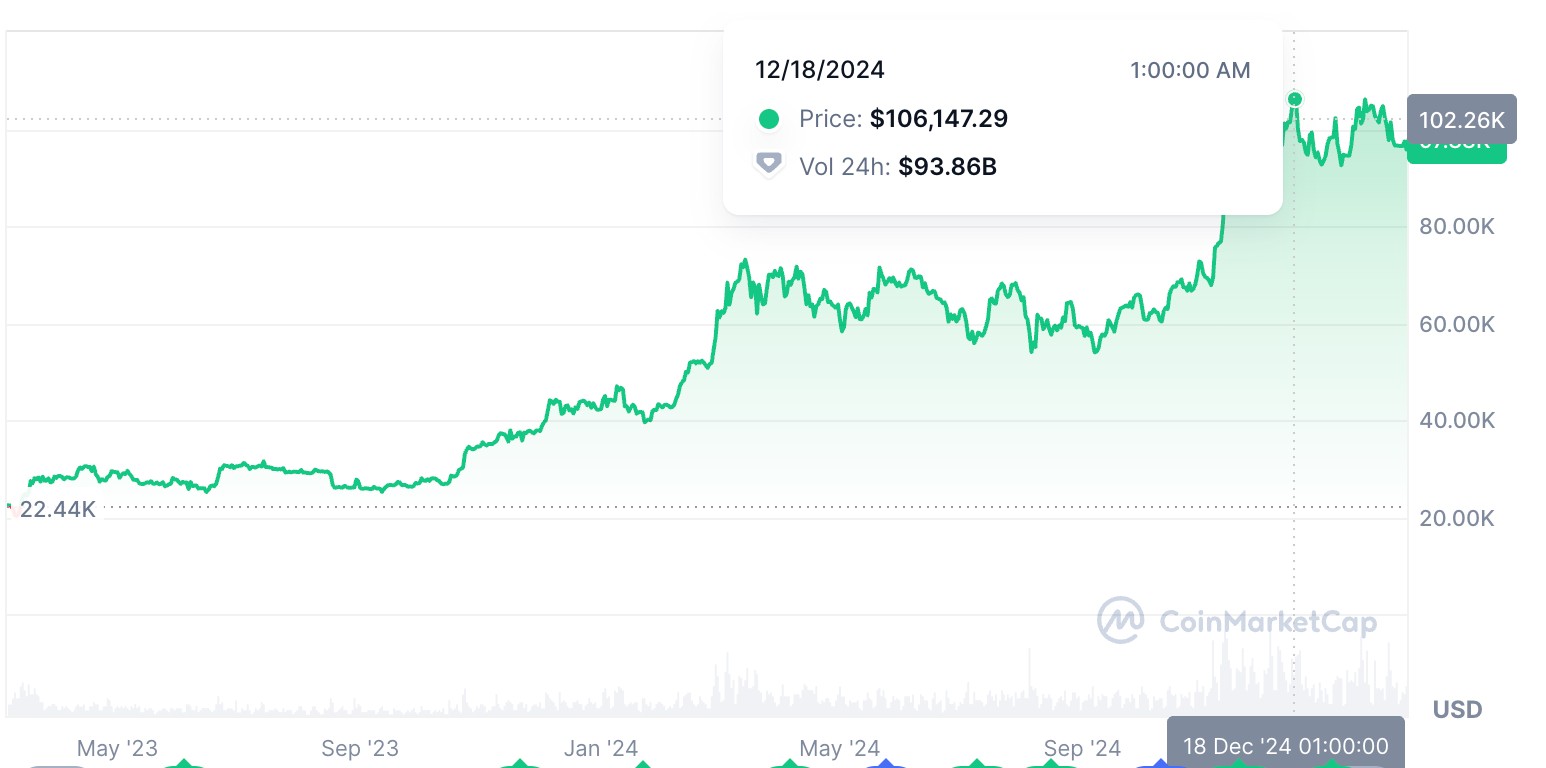
Due to these historical statistics, many business moguls and market analysts have concluded their prediction that a possible $1 million mark is likely. Moreover, the assimilation of Bitcoin into mainstream institutional portfolios, akin to gold’s established role as a store of value, could inject trillions into its market cap.
Gold has a market cap of around $22 trillion, while Bitcoin has a market cap of around $2.3 trillion. If Bitcoin can grow to the same market cap as gold or close to it, then the cryptocurrency would have achieved a $1 million price point, calculated by multiplying $1 million by the finite supply of 21 million Bitcoins.
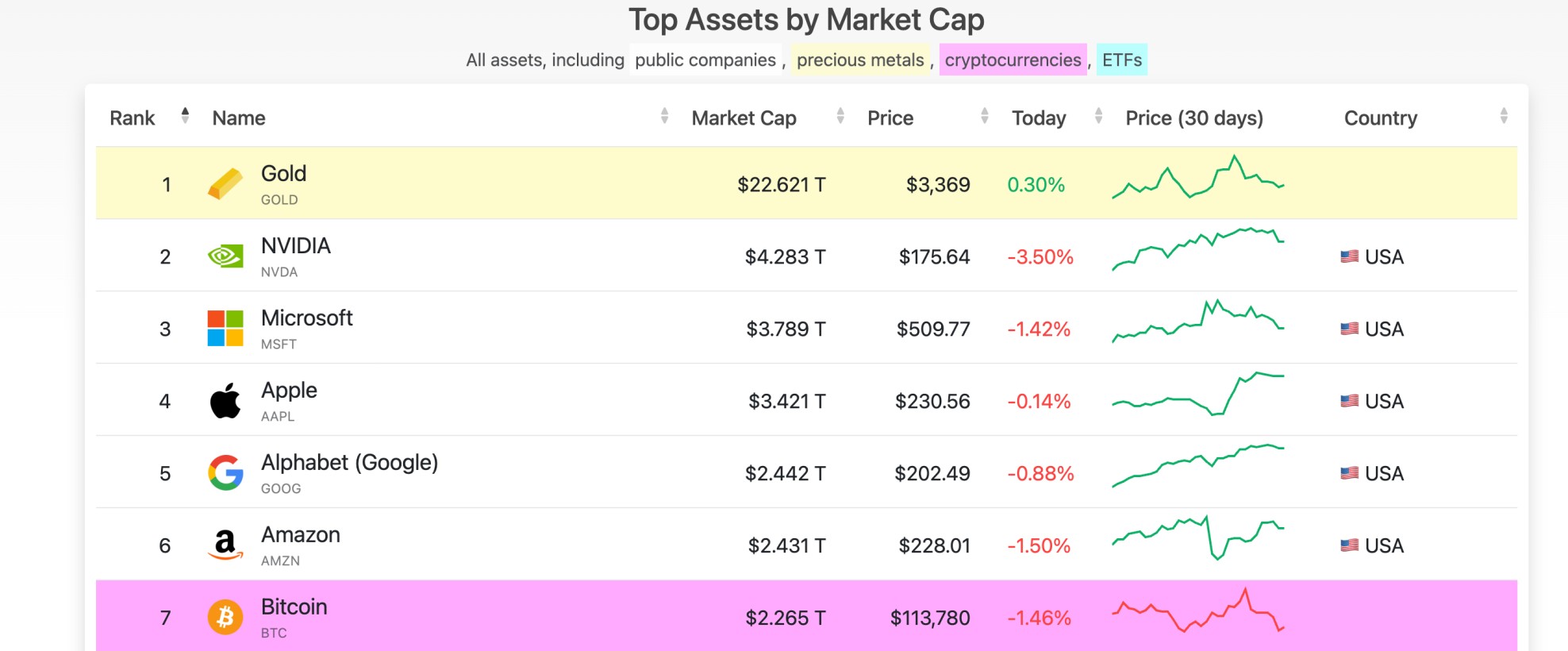
However, several elements would have to come together for Bitcoin to reach such astronomical figures. The next section takes a closer look at these factors.
Factors That Could Push Bitcoin to $1M
While seemingly audacious, this $1 million target becomes less unreal when considering the confluence of several critical factors. These involve increased institutional investment, widespread global adoption, the establishment of clear and supportive regulatory frameworks, and continued technological advancements.
Institutional Investment
Currently, institutional involvement in Bitcoin remains tentative, with most large entities merely “testing the waters.” However, a significant shift in this behavior could serve as a powerful catalyst for price appreciation.
Michael Saylor, a prominent advocate for Bitcoin, asserted that a mere 10% allocation of Wall Street’s reserves to Bitcoin could propel its market capitalization to a staggering $20 trillion, consequently driving the price towards $1 million.
This projection highlights the immense potential that lies in increased institutional participation. As institutions gain greater confidence in Bitcoin’s long-term viability and its role as a store of value, their investment could inject substantial capital into the market, significantly affecting its price.
Global Adoption
For Bitcoin to attain widespread acceptance and reach the million-dollar milestone, it needs to transition from a niche asset to a mainstream currency embraced by a significant portion of the global population.
At the time of writing, several reports estimate the global adoption of Bitcoin to be anywhere between 1% and 6% of the world’s population. Experts suggest that adoption by at least 20%–40% of the world’s population is necessary to achieve the $1M price target.
Furthermore, this requires addressing several key challenges, including enhancing user experience through more intuitive applications, developing solutions that facilitate faster and cheaper transactions, improving the security and accessibility of Bitcoin wallets, and promoting widespread education to empower individuals to use Bitcoin without requiring specialized technical knowledge.
Overcoming these hurdles will be crucial in fostering mass adoption and realizing Bitcoin’s full potential as a globally accessible and utilized digital currency.
Regulatory Clarity
The regulatory landscape surrounding Bitcoin and other cryptocurrencies plays a crucial role in shaping investor sentiment and fostering market stability.
Supportive and well-defined regulations, such as the GENIUS Act and Clarity Act, provide clarity and reduce uncertainty, thereby encouraging both institutional and retail investors to participate in the market with greater confidence.
A predictable and transparent regulatory environment attracts capital and promotes innovation within the Bitcoin ecosystem. Conversely, ambiguous or restrictive regulations can stifle growth and hinder Bitcoin’s progress toward becoming a mainstream asset.
Therefore, the establishment of clear and supportive regulatory frameworks is essential for fostering long-term growth and stability in the Bitcoin market.
Popular $1M Per Bitcoin Predictions
Over the years, numerous analysts and prominent business figures have speculated on the potential for Bitcoin to reach the $1 million mark. Arthur Hayes, a long-term Bitcoin investor and founder of BitMEX, wrote in a May 2025 blog post, citing catalysts that would“power Bitcoin to $1 million sometime between now and 2028.”
Hayes is not alone in his bullish outlook, as other prominent figures in the cryptocurrency space have echoed similar sentiments, albeit with slight variations in their projected timelines.
Rich Dad Poor Dad Author Robert Kiyosaki, who is famous for recommending hard asset investing, specifically gold and silver, predicted:
I firmly believe, by 2035, that one Bitcoin will exceed over $1 million, gold will be $30,000, and silver $3,000 a coin.
Finally, in May last year, X (formerly Twitter) co-founder and millionaire Jack Dorsey asserted that Bitcoin would reach $1 million by 2030, noting that decentralized finance was the future and that Bitcoin would prosper with increasing mistrust in central banks.
Who Wins or Loses When Bitcoin Hits $1M
If Bitcoin reaches $1 million, Bitcoin owners would likely experience a significant increase in wealth, maintaining their buying power if the dollar’s value decreases due to inflation.
Conversely, those who do not own Bitcoin might see a decrease in their relative wealth compared to Bitcoin holders, especially if the dollar’s value declines. However, the impact depends on broader economic conditions and the reasons behind Bitcoin’s price surge.
Early Adopters’ Edge
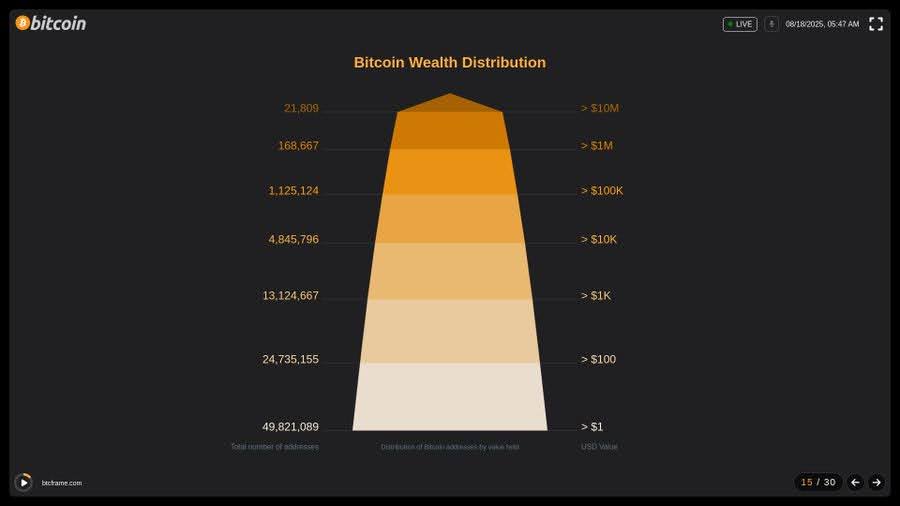
Statistically, approximately 900,000 addresses now hold at least 1 BTC, while an estimated 4% of the global population possesses some fraction of this groundbreaking cryptocurrency.
However, beneath the widespread adoption lies a stark reality: the vast majority of Bitcoin is concentrated in the hands of a select few wealthy individuals and institutions, raising profound questions about financial equity and the long-term sustainability of Bitcoin’s growth.
Consider, for example, the hypothetical scenario of Bitcoin reaching a valuation of $1 million per coin. For entities like Strategy, whose current Bitcoin holdings are substantial, this would translate into a staggering wealth accumulation of over $600 billion.
Similarly, early retail investors who acquired Bitcoin at prices ranging from a mere $0.01 to $1 would witness exponential returns on their initial investments, potentially transforming modest sums into multimillion-dollar fortunes.
The story of Satoshi Nakamoto, the enigmatic creator of Bitcoin, further illustrates this point. Believed to hold approximately 1.1 million BTC, representing around 5.2% of the total supply, Satoshi’s holdings would be valued at an estimated $1.1 trillion should Bitcoin reach the $1 million mark. While this serves as a testament to the transformative potential of Bitcoin, it also highlights the immense concentration of wealth within the cryptocurrency ecosystem.
The Late Adopters’ Pressure
Conversely, the ascent of Bitcoin towards $1 million raises concerns about the potential exacerbation of global financial inequality. The gap between early investors and latecomers is likely to widen dramatically, presenting new challenges for equitable wealth distribution.
Furthermore, latecomers may be exposed to considerable financial risks. Should Bitcoin’s price experience a correction or a more severe crash after reaching its peak, those who bought in at inflated prices could suffer substantial losses, potentially jeopardizing their financial stability.
The growth trajectory of Bitcoin bears a resemblance to a pyramid structure, wherein early participants benefit as fresh capital from new buyers enters the market at progressively higher prices. This model, however, is inherently vulnerable due to its reliance on continuous investment to sustain upward momentum.
When Will Bitcoin Reach $1,000,000?
Bitcoin’s trajectory toward the ambitious $1 million mark is a subject of considerable debate and speculation within the financial community. Market sentiment, for instance, remains a dominant force behind Bitcoin’s dramatic price swings.
Additionally, regulatory announcements, political developments, and broader economic conditions can trigger significant movements in either direction, making the path to $1 million highly unpredictable.
However, the cryptocurrency’s programmed “halving” events, which cut the rate of new bitcoins entering circulation approximately every four years, introduce a compelling dynamic. This mechanism inherently diminishes the supply of new bitcoins, and when combined with increasing institutional interest and adoption, this scarcity has historically supported upward price movements.
Historically, it took twelve years for Bitcoin to reach $50,000. Subsequently, the ascent to $100,000 transpired within a significantly shorter timeframe of three years. As of December 1, 2024, the total number of bitcoins in supply stood at 19.79 million, approaching the total supply cap of 21 million.
The next halving event is projected to occur in 2028, further reducing the rate at which new bitcoins are mined. Historically, BTC tends to double its price within 12-18 months after each halving. With at least two halvings expected over the next decade, a $1 million BTC price becomes something investors can dream about.
As a note of caution, though, while historical data and the inherent scarcity of Bitcoin suggest the potential for continued price appreciation, it is crucial to acknowledge the cryptocurrency market’s inherent volatility and speculative nature. Thus, reaching the $1 million threshold is by no means guaranteed, and investors should exercise caution and conduct thorough research before making any investment decisions.
Can Bitcoin Cross $1 Million in the Next Ten Years?
Bitcoin can cross $1 million within the next ten years if the factors discussed earlier come together. In support of this, various predictions, as discussed earlier, suggest Bitcoin could reach $1 million within the next ten years, with some analysts believing it could happen even sooner.
However, it is hard to say with certainty if BTC will hit its $1 million mark within ten years. After all, the cryptocurrency market is known for its unpredictable movement because of external influences and market sentiment.
Nonetheless, one of the most striking aspects of the current market is the relative consensus among analysts regarding Bitcoin’s long-term potential. As previously noted, Arthur Hayes, the founder of BitMEX, has projected that Bitcoin could surge to between $750,000 and $1 million between 2026 and 2028. This ambitious target reflects a belief in the continued adoption and maturation of Bitcoin as a store of value and a hedge against traditional financial systems.
Similarly, Samson Mow of Jan3 anticipates that Bitcoin could reach these levels within the next year or two. Such positive expectations reveal the prevailing sentiment of hopefulness within the market.
Final Thoughts
Although the prospect of Bitcoin reaching $1 million per coin is seen as possible by many analysts, it is essential to know that it depends on factors like institutional adoption, global acceptance, and clear regulations, which can significantly influence the price direction.
However, a surge to the $1 million mark would significantly reshape the financial landscape, benefiting early adopters but potentially widening the wealth gap. Arguably, the path to this milestone is not guaranteed and remains subject to the inherent volatility and external influences of the cryptocurrency market.








 Mishael Nwani | September 18, 2026

 Jonathan Agozie | September 11, 2026