
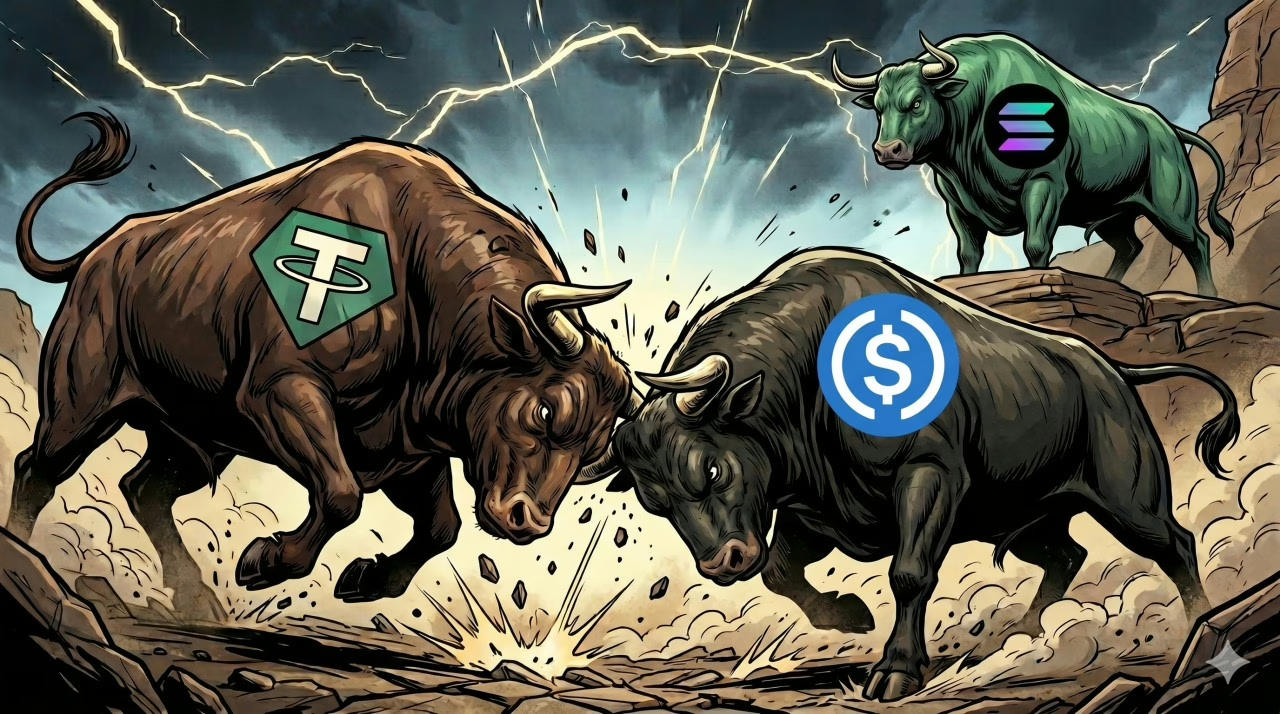
The largest stablecoin issuer, Tether, announced this week a surprising partnership with Drift Protocol, a Solana-based DeFi protocol that lost approximately $285 million in a security breach earlier this month. Tether will commit up to $127.5 million to Drift protocol’s recovery efforts, teaming up with other entities to provide the project with a combined $150M comeback package.
However, as many eagle-eyed industry participants have pointed out, Tether’s decision to back Drift Protocol is about more than a desire to support an ailing project. Instead, it is a classic move to break into difficult territory at a time when a major competitor, Circle, is facing public scrutiny.
Let’s dive into this together.
Tether’s PR Masterclass Post Drift Protocol Hack
On April 1, Drift Protocol suffered a ghastly security breach that led to the loss of over $285 million in user assets. The protocol blamed the loss on a sophisticated social engineering attack that took multiple months and required the hackers to spend significant resources to execute. You can read more about the hack in our coverage.
Nonetheless, the most distressing part for many users was that hackers, alleged to have ties to North Korea, used Circle’s Cross-Chain Transfer Protocol (CCTP) bridge infrastructure to move over $230M in assets. If the stablecoin issuer had intervened, then a significant portion of the losses would have been recovered, and victims would at least have something to cheer about.
Circle CEO, Jeremy Allaire, did little to calm the Solana ecosystem. Speaking earlier this week at a conference in Seoul, he noted that it is a “moral quandary” if a private company like Circle gets to choose whether to stop hackers from using loot users’ funds. In an open ecosystem and fast-moving industry like crypto, where millions could be lost or frozen in mere seconds, Circle insists that projects obtain a court order, which takes at least days, before it can act to protect users.
Tether, not the most loved name in the crypto ecosystem, however, saw Circle’s reported incompetence as an opportunity to win over the Solana ecosystem and expand USDT’s appeal to users on the network.
Tether’s Bid to Catch Up Lost Ground on Solana
Tether is the largest stablecoin by quite a mile. It has a market cap of $185 billion, which is $100 billion more than Circle’s USDC. It is also the most widely used stablecoin across major blockchains, including Ethereum, Tron, and Polygon. It is only on one major blockchain -Solana – that Tether trails Circle.
According to on-chain data, Circle holds $8 billion in USDC on Solana, while Tether holds roughly $3 billion. Circle publicly positioned itself as a friend of Solana through close ties with the Solana Foundation in its early years (a partnership dating back to October 2020, when USDC first launched on Solana). This gave Circle an advantage and made USDC an almost default stablecoin for the Solana blockchain.
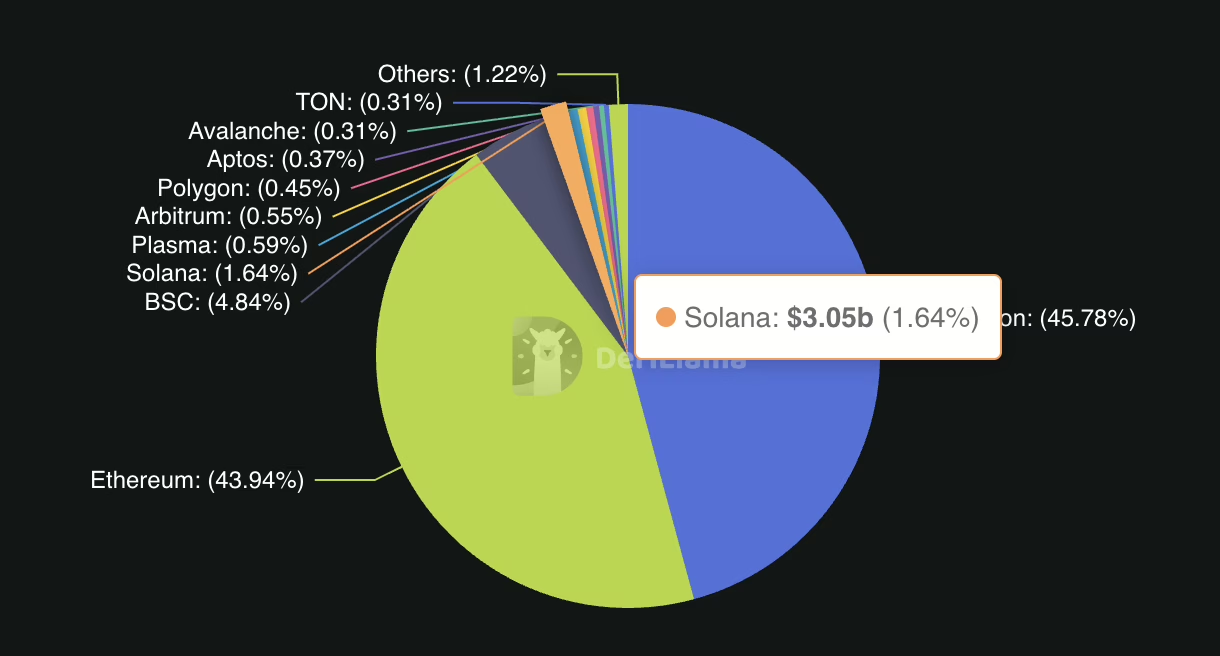
Tether, in contrast, has struggled to win over the Solana ecosystem. In fact, only 1.64% of all USDT in circulation is on the Solana blockchain. For context, 45.78% is on Tron, while roughly 44% in on the Ethereum network.
By stepping in to support the Solana ecosystem and its users at this crucial time of the Drift Protocol Hack, Tether assumes the role of a “knight in shining armor.” You do not have to look further than Tether CEO Paolo Ardoino’s post on X after the Drift Protocol deal to believe this framing.
Tether cares https://t.co/R2vTti2N0b
— Paolo Ardoino 🤖 (@paoloardoino) April 16, 2026
Without a doubt, this Tether move gives users and Solana-based protocols a strong basis for further integrating USDT. It is even more interesting that the move is already bearing fruit.
As part of the deal, Drift Protocol will heavily integrate USDT in its soon-to-be-relaunched platform. Founders of other Solana-based protocols, such as Loopscale, Project 0, and Kamino, have all weighed in and announced efforts to give USDT greater prominence on their platforms.
It will be interesting to see in the coming months whether Tether’s latest move yields the desired results and helps it regain lost ground in the Solana ecosystem. If such an outcome plays out, then Drift protocol’s unfortunate moment will fondly be remembered as one that paved the way for Tether to strengthen its strong dominance on the stablecoin economy.







 Ephraim Emmanuel | September 7, 2026


 Jonathan Agozie | September 6, 2026
 Chris Lion | September 4, 2026
