Ethena’s DeFi ecosystem has entered a contraction phase following the $294 million KelpDAO exploit in April 2026. The incident triggered a shift in capital flows, with users withdrawing funds amid rising risk concerns.
Data from DefiLlama shows Ethena’s TVL fell from about $6.65 billion on April 18, following the hack, to $4.43 billion on May 6, marking a decline of roughly $2.2 billion. Over a longer timeframe, the protocol has shed more than $10 billion from its October 2025 peak of around $15 billion.
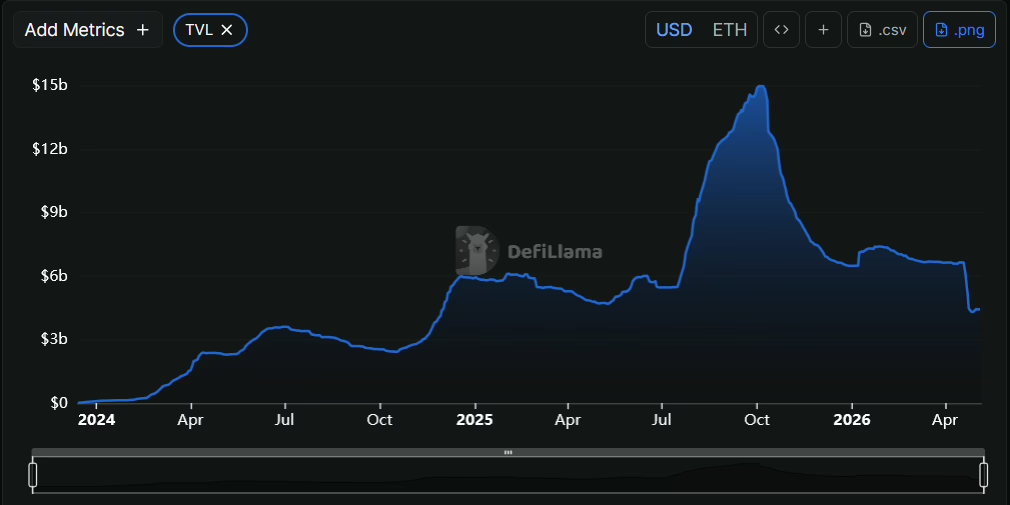
Liquidity Stress Following Exploit
Ethereum continues to host nearly all of the remaining capital, accounting for about $4.422 billion in locked assets. A small share of about $4.07 million is on the TON network, while USDe supply stands near $3.9 billion.
This contraction has been driven largely by withdrawals from key collateral sources. The largest outflows came from staked ETH assets and Bitcoin collateral that previously supported USDe’s delta-neutral structure. Assets such as wstETH, rsETH, and ETHx formed a major part of this base before their share declined sharply.
At their peak, these crypto-backed perpetual positions accounted for about 93% of USDe collateral. By April and May 2026, that share had dropped to around 11% as the protocol reduced reliance on volatile funding conditions.
The shift reflects a broader unwind of leveraged strategies across DeFi lending and yield platforms. Users exited looping positions on Aave, Pendle, and Morpho as returns weakened and risk increased.
These loops relied on depositing sUSDe as collateral to borrow stablecoins and mint additional exposure. As funding rates and basis spreads compressed, many positions yielded lower or negative returns, prompting large-scale redemptions.
Market stress intensified after the KelpDAO and LayerZero-related rsETH exploit disrupted liquidity across DeFi lending markets. The event reinforced precautionary withdrawals, even from protocols with limited direct exposure.
Shift Toward a More Stable Structure
Despite the decline, Ethena continues to operate with a revised collateral structure focused on stability. The protocol has reduced exposure to volatile assets and adjusted its yield profile to reflect current conditions.
This shift is visible in its current returns and revenue metrics. sUSDe yields now sit near 3.3% annual percentage yield, reflecting a lower but steadier environment. Annualized protocol fees remain at around $194.67 million, although actual revenue has declined as scale has reduced.
The trend highlights how leveraged yield strategies can reverse quickly when market conditions change. Ethena’s transition signals a shift away from rapid expansion toward a structure designed for longer-term sustainability.
Importantly, the decline in TVL does not directly relate to movements in the ENA governance token. Instead, it reflects lower USDe supply, reduced fee generation, and broader adjustments within the protocol’s capital base.








 Ephraim Emmanuel | October 15, 2026