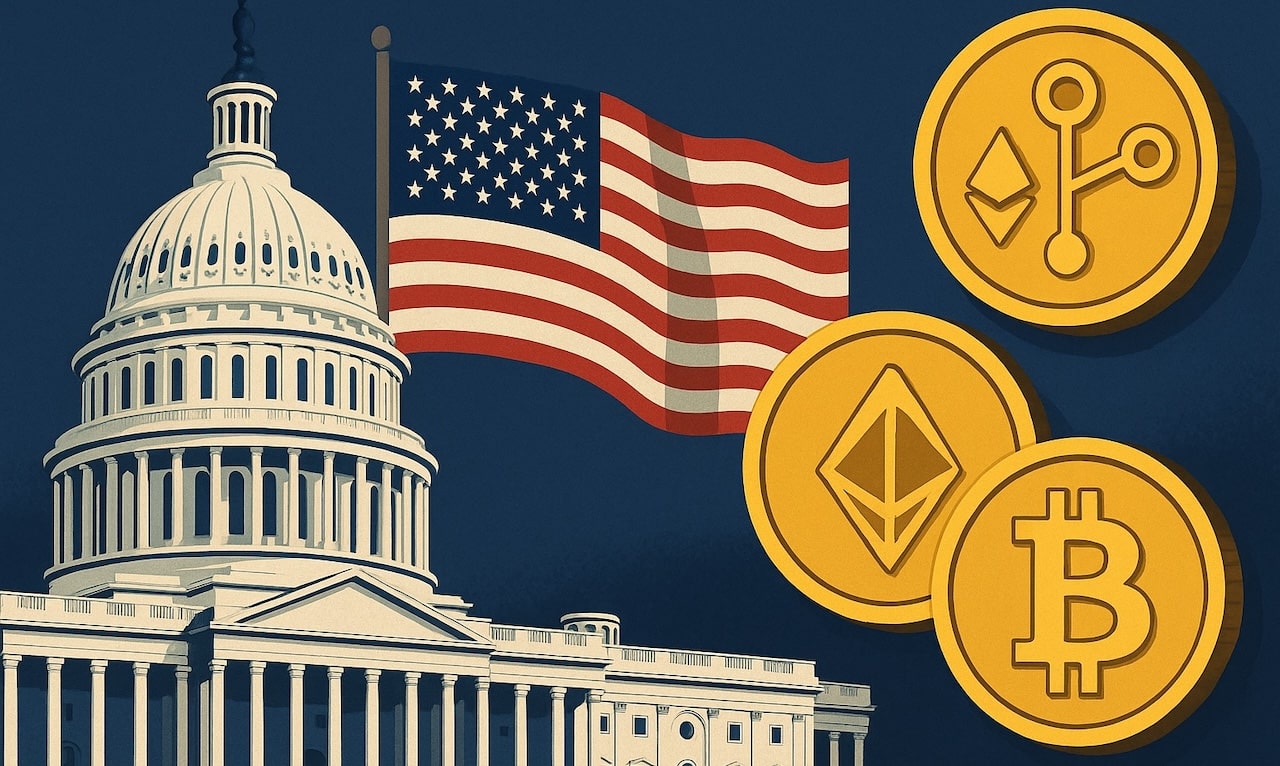
The United States Senate Banking Committee has unveiled a new draft of the Crypto Market Structure Bill to bring more clarity to cryptocurrency regulations. The updated draft introduces specific rules covering staking, DePIN, and airdrops, while clarifying which activities are not considered securities.
The clarification follows ongoing guidance from the U.S. Securities and Exchange Commission (SEC). Six months ago, the SEC stated that it does not classify memecoins as securities. The agency, however, cautioned that fraudulent activities involving these tokens could still face enforcement actions from other regulatory bodies.
Security Exemptions and Developer Protections
Staking, DePIN, and airdrops are explicitly exempted, reflecting prior SEC guidance that staking does not qualify as a security. NFTs are clearly confirmed as not being securities. Buying, selling, or transferring NFTs does not count as an investment contract under federal law.
Section 101 clarifies the status of ancillary assets, excluding those that do not meet the definition of a security. It also limits SEC enforcement actions against existing tokens unless fraud is involved, offering legal certainty for market participants.
These updates reflect feedback from Ripple, which stressed the need to prevent excessive regulatory reach. Lawmakers aim to ensure future SEC administrations cannot apply restrictive interpretations that could affect legitimate crypto activities.
The bill also includes protections for software developers. Decentralized finance platforms receive exemptions when they cannot meet the same operational standards as centralized platforms. The Blockchain Regulatory Certainty Act also provides additional safeguards for creators.
Developer protections became more urgent after the Roman Storm trial, where he was convicted of unlicensed money transmission. The case highlighted the need for clear rules to protect creators who operate in good faith.
Following the trial, the Department of Justice confirmed it will only pursue developers who act with malicious intent. The updated bill reinforces this principle, ensuring developers have legal clarity and safeguards while building decentralized platforms.
Regulatory Cooperation Between Agencies
The new draft encourages coordination between the SEC and CFTC to oversee the crypto industry. Section 701 establishes a Joint Advisory Committee for both agencies to work together on regulatory matters. Section 702 sets guidelines for resolving disputes between them.
These measures formalize ongoing collaboration and support the bill’s broader goals. The bill defines exemptions and protects developers. It also improves inter-agency coordination to provide a more predictable framework for the cryptocurrency sector.






 Ephraim Emmanuel | October 14, 2026