Bitcoin ended February with notable losses, marking yet another month of consistent decline. Its close has since raised doubts and optimism about how March will be.
In hindsight, geopolitical tension and several other events in the crypto market kept the apex coin down. News of the impending strikes on Iran by the US and Israel took center stage for most of February.
Investors anticipated the strikes while dealing with a flurry of negative economic readings. The attacks began on Saturday and are ongoing. In reaction, BTC dipped to $63k but rebounded. In the end, the previous month ended with losses exceeding 14%.
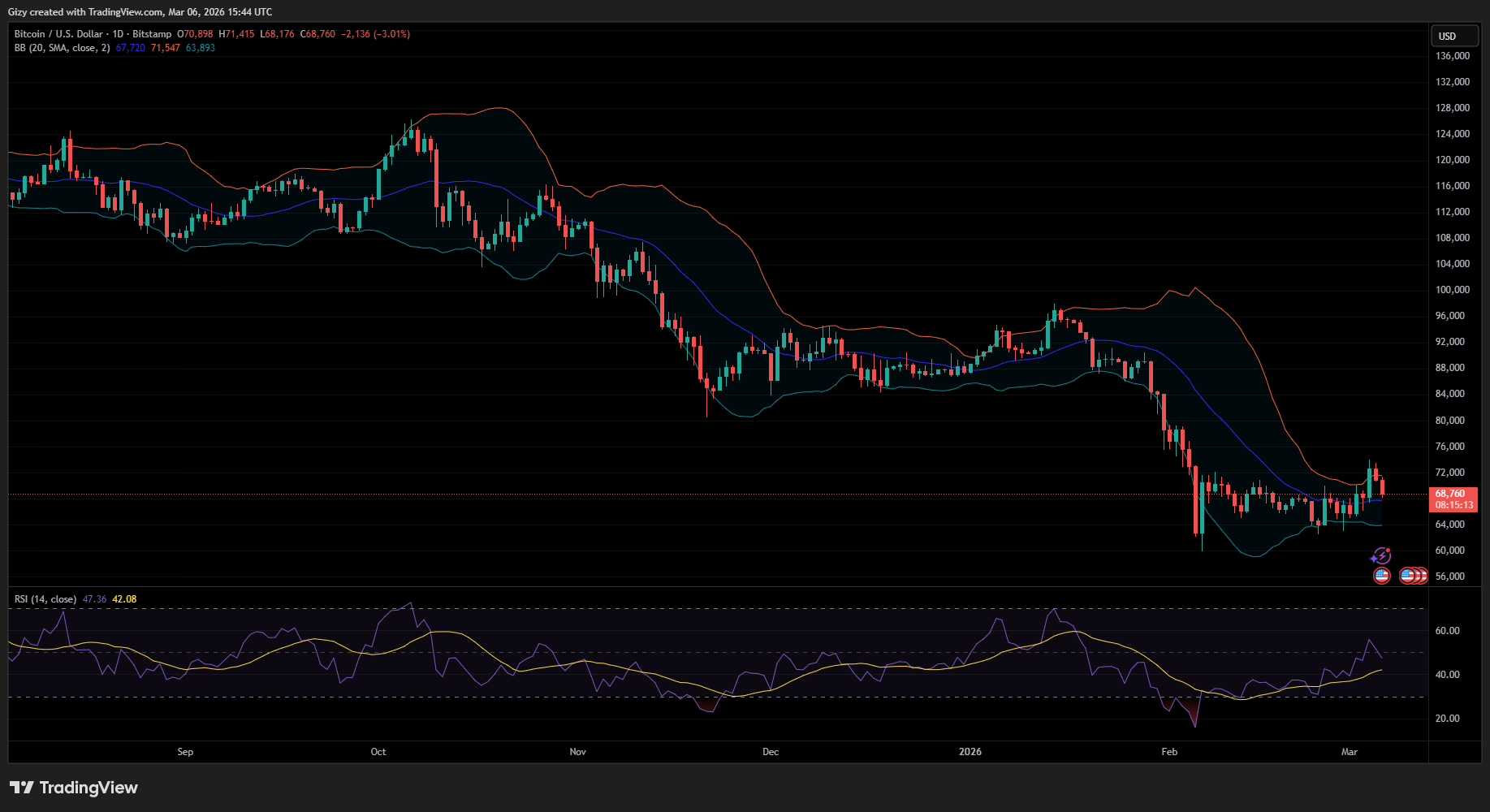
A closer look at the 1-month chart shows that the apex coin has been declining since October. February marked its fifth consecutive month with losses: a rare occurrence.
Nonetheless, March kicked off on a better note. The apex coin has seen notable increases since the week started. It kicked off Monday with gains exceeding 4% and continued its surge on Wednesday, surging to a high of $74k for the first time since Feb 5.
However, since this massive 6% increase, Bitcoin has grappled with notable selling pressure. It shed off over 2% during the previous intraday session and is currently declining.
The latest round of selling saw the asset retrace below $70k, raising questions about subsequent price action.
Why Bitcoin Surged
Since the strikes and retaliatory strikes started in the Middle East, investors have been searching for safe assets to invest in as the threat to the oil industry increases.
They’ve shown significant risk appetite, buying up Bitcoin ETFs over the last few days. Data from SosoValue shows that, as of Feb 24, the volume picked in the US market is positive. The bullish action continued over the next two days, resulting in a net influx of more than $700 million.
The trend extended into the current week, with netflow exceeding $1 billion during the first three days. While green netflow does not always coincide with price surges, a buildup always results in a short burst, as seen over the past few days.
Aside from accumulating the exchange-traded funds, investors also slowed their selling. GugaOnchain stated in a recent post that deposits into exchanges have significantly reduced over the last few days. The drop in selling, in addition to ETF buying, was behind the latest surge.
On the monthly scale, the apex coin is up by over 2% at the time of writing. The recent surge comes as no surprise, as a recent analysis depicted a scenario in which such a surge would occur. While commenting on the possibility of a significant recovery, it highlighted the Sharpe ratio and concluded that a surge is likely.
It added that the apex coin added $4k two weeks ago, and a repeat will happen as “a flurry of fundamentals could see the $72k resistance crumble.”
However, the uptrend has since faded, and the ensuing downtrend enters day 2. Bitcoin is trading at sub-$69k at the time of writing, indicating an over 5% decline in the last 48 hours.
In hindsight, the last five months have started almost the same way. BTC experiences notable surges during the first week and massive declines in the subsequent days. It has already seen significant increases, and questions remain about the coming days: whether the five-month trend will repeat in March.
Is That All?
Considering price action over the last five months, it is easy to conclude that the first week’s surge is the highest for March. However, there are speculations that the coming days will be some of the most bullish.
They claimed that, since the asset has been trending down over the last five months, a reversal is due. Some backed the claim with ‘data’, stating that losing five months in a row is rare and that recovery is expected in the coming days.
While the speculations are mostly based on little to no facts, there’s a chance of further increases. One of the triggers for the recent surge is investors in search of more profitable assets at a time when the oil market carries massive risk. If the Middle East conflict drags on, the crypto market may see more capital inflow. However, it’s not guaranteed.
Still on the Middle East conflict, it’s becoming less of a breaking news story, and investors are looking forward to the next strong move. The end of the current war will undoubtedly result in notable increases. It remains to be seen if the end will happen this week.
The claim that five-month losses are rare is true. Nonetheless, the last time a surge happened, the price retraced the next month. It happened in between 2018 and 2019, starting in August and ending in January. If history repeats, March is bound to be another bearish month for Bitcoin.
Bitcoin Glows Green March
There are several highlighted reasons to conclude that the third month will be more bullish than the previous month. Aside from fundamentals, history shows notable gains during this period.
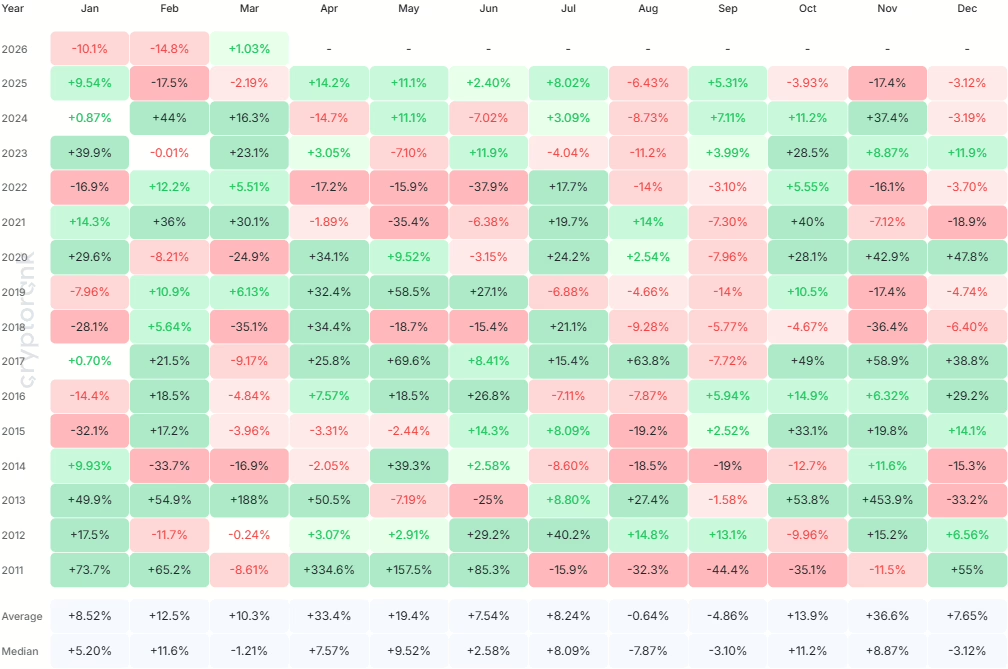
For example, the apex coin gains an average of 10% every March. The chart above shows that it once went on a four-consecutive streak. Although it saw notable losses in 2025, investors are looking forward to resuming the streak this month.
However, looking back at actions in the previous decade shows another grim reality. Bitcoin experienced notable losses for five consecutive years.
In a nutshell, while the average and other factors suggest the chances of significant surges, the apex coin is not in the clear. The market remains riddled with fear as capital inflow and participation from new investors remain critically low.
This means prices will retrace in the coming days, but the retracement will be smaller than in February. Additionally, it will register a new low, but recovery is almost certain.