
There are decades where nothing happens, and there are weeks where decades happen. The last few weeks have been nothing short of eventful for the cryptocurrency industry.
The market witnessed the largest crypto liquidation event ever (over $19B wiped in 24 hours), and one of the most extended AWS outages in a long while. Ask anyone in crypto, and they would tell you that these events are better avoided than experienced. Market confidence and user trust suffer bruises that take weeks and months to heal.
However, builders and long-term believers understand that these moments provide ample opportunity to reflect on what has been built so far. After all, it would be ironic to claim that blockchains and indeed crypto as a whole are ready for mass adoption if they cannot efficiently handle these stress-test moments.
In this report, we take a closer look at how the top layer-1 and layer-2 blockchains fared with both crises. To be clear, this report is inspired by an X post by Solana co-founder Raj Gokal that highlighted the need for an unbiased post-mortem on every L1’s and L2’s performance during these recent events.
While a reward may be attached, we firmly believe users deserve insights into network activity and have undertaken this research regardless of whether it tops the charts.
With that out of the way, let’s dive into the results and share our findings, beginning with leading L1s. We look at key metrics such as liveness, fee spikes, and throughput.
How Top Blockchains Handled the October 10 Crash and AWS Outage
Ethereum
Without a doubt, the biggest fish in the ocean of L1s, the Ethereum network, has come a long way in implementing its scaling roadmap. Median gas fees are now consistently around $0.3, a far more reasonable cry compared to a few years ago. During the October 10 market crash, the Ethereum network did not suffer downtime.
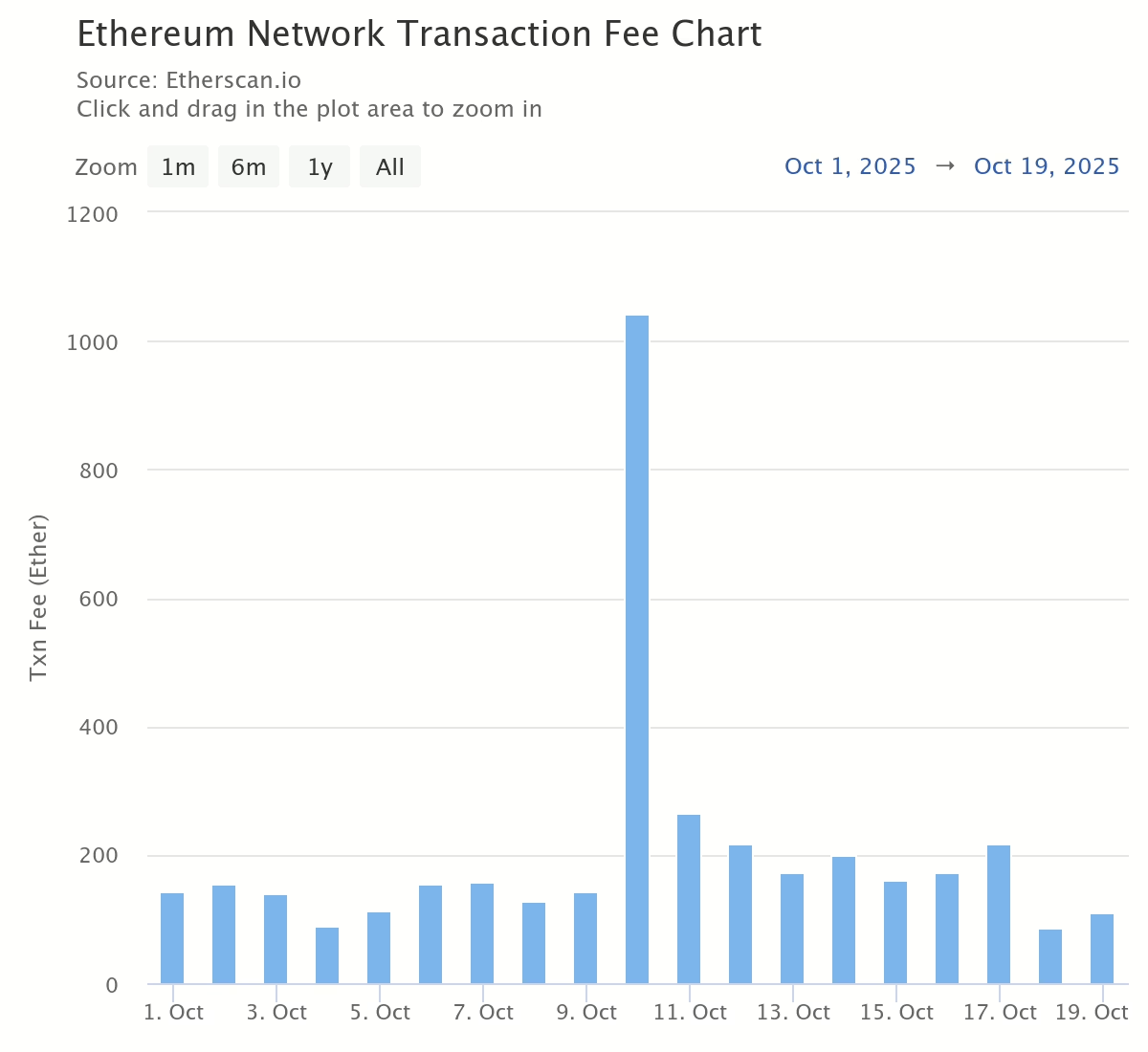
Nonetheless, gas fees spiked significantly. As data from Etherscan shows, total transaction fees for the said date totalled 1042.8 ETH (approximately $4.15 million). The number is more than five times the usual transaction fees collected on the network, an average of 200 ETH ($800,000).
For the average user, this fee spike meant paying as much as $40 for a simple transfer, with some users reporting seeing gas fees of up to $500 for DeFi transactions. There were more than 90,000 transactions pending confirmation at the peak, an 18% increase from the usual range of around 80,000 transactions. For context, Ethereum handles around 17.5 transactions per second.
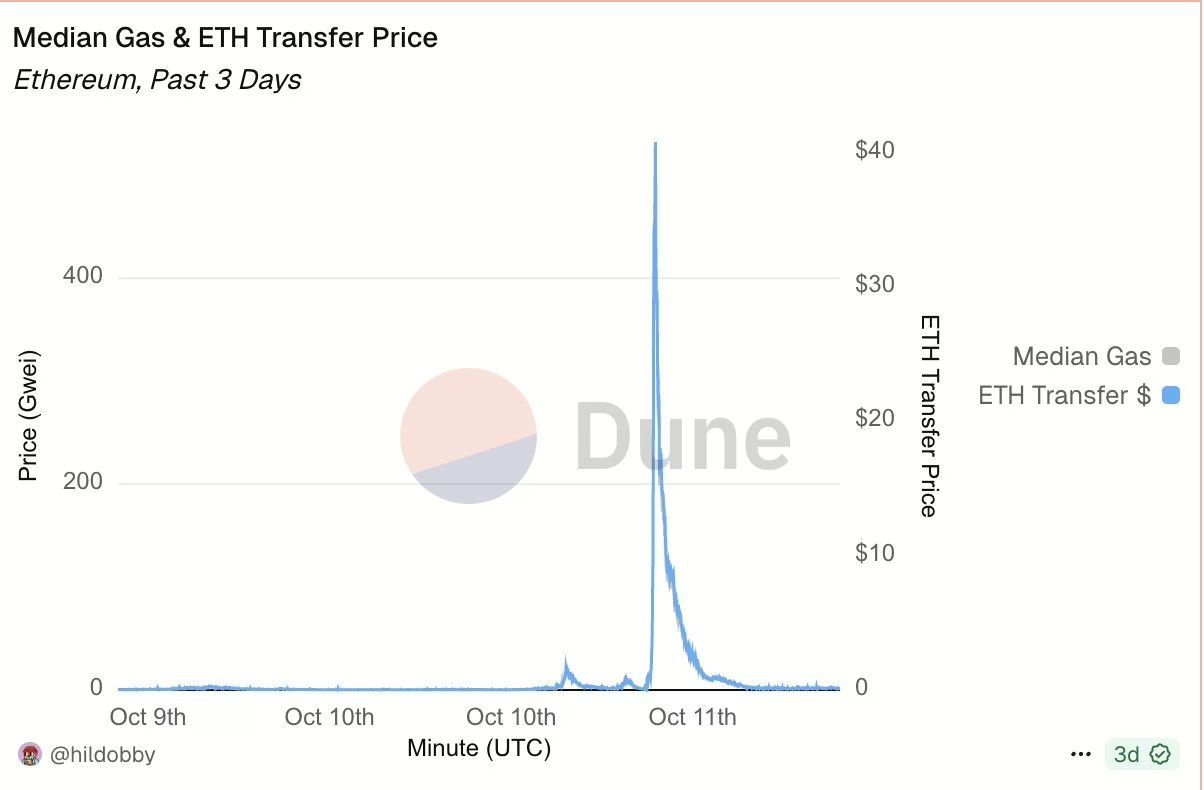
To be fair, Ethereum’s handling of the intense blockchain demand amid pending liquidations is not entirely surprising for anyone who has used the network in the past. If anything, the situation has improved, but evidently still pale in comparison to new generation blockchains.
Ethereum and L2s Hit by AWS Outage
Similar to conditions during the market crash, it is worth noting that the underlying Ethereum network or layer-2s did not suffer any liveness or performance issues because of the AWS outage on October 20. However, Infura, a leading RPC provider for Ethereum-based applications, is hosted on AWS and suffered significant degradation as a result of the outage.
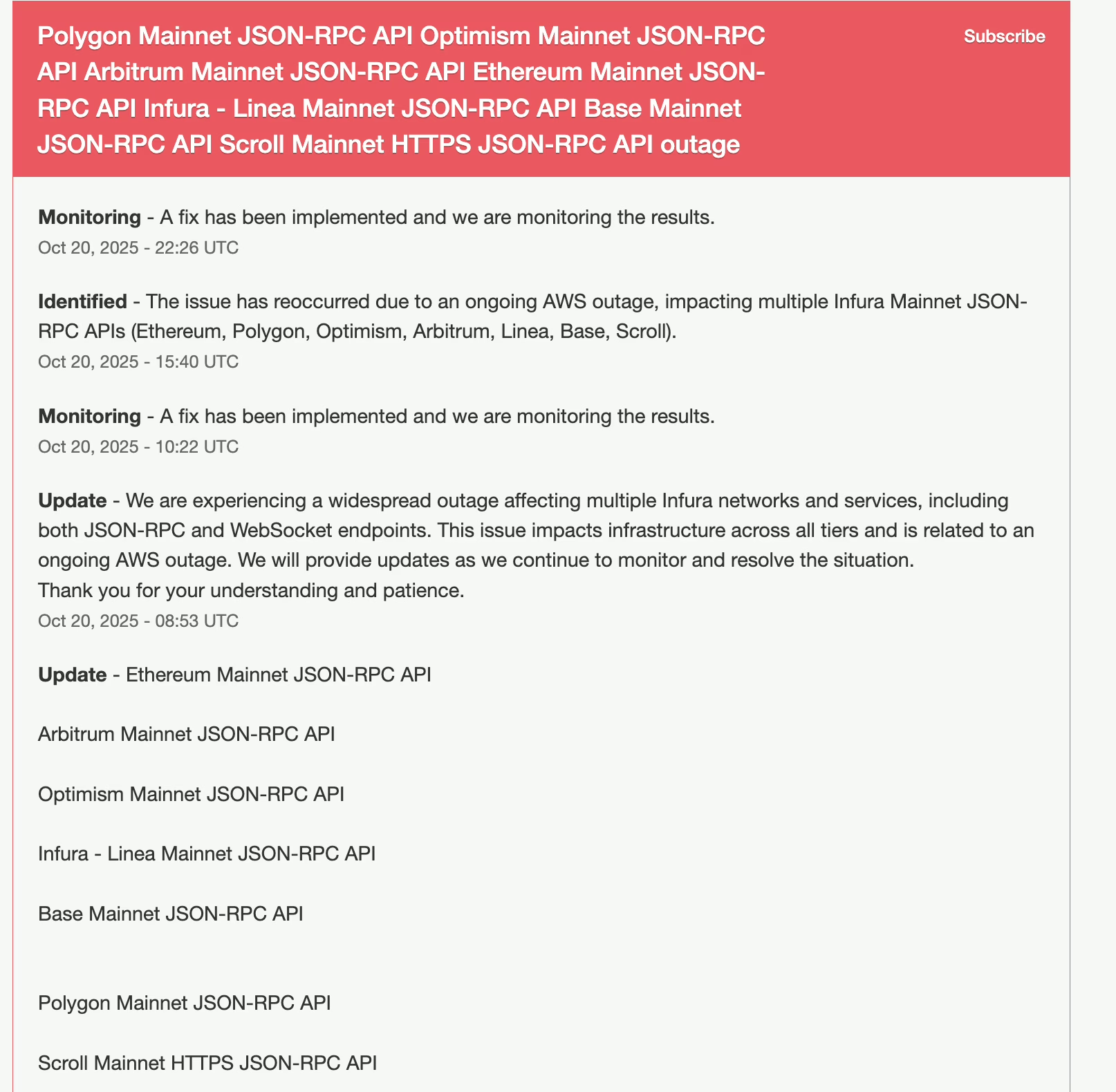
Infura claims to serve more than 350,000 Ethereum-based developers, meaning most leading platforms like Metamask and Uniswap were impacted. At the time of writing, the outage has lasted for more than 15 hours, meaning users continue to contend with less favorable experiences, such as retrying transactions and experiencing slow loading times if their favorite dApp is also hosted on AWS.
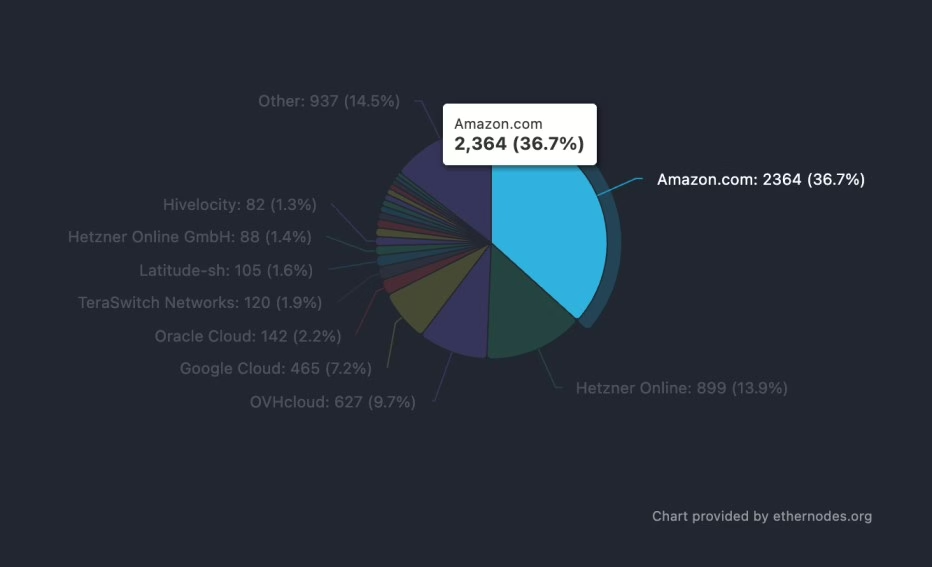
It is also worth noting that around 36% of Ethereum’s execution layer nodes use AWS. Even though the current metrics mean that the Ethereum network would still work if AWS goes completely offline, the reliance on the cloud services giant is becoming a gradual concern, especially coupled with Infura’s dependence.
Solana
In its early days, circa 2021-2022, Solana came under heavy criticism for its liveness issues and rightly so. While being prized as the one to claim Ethereum’s crown, the network went offline multiple times during peak network demand and for several hours. Botted NFT mints and high-profile token launches typically meant longer working hours for validators who struggled to keep the network online.
Fast forward to the present, and Solana appears to have made significant progress. For the record, the network remained fully operational during the October 10 market crash, and user experience suffered little to no degradation.
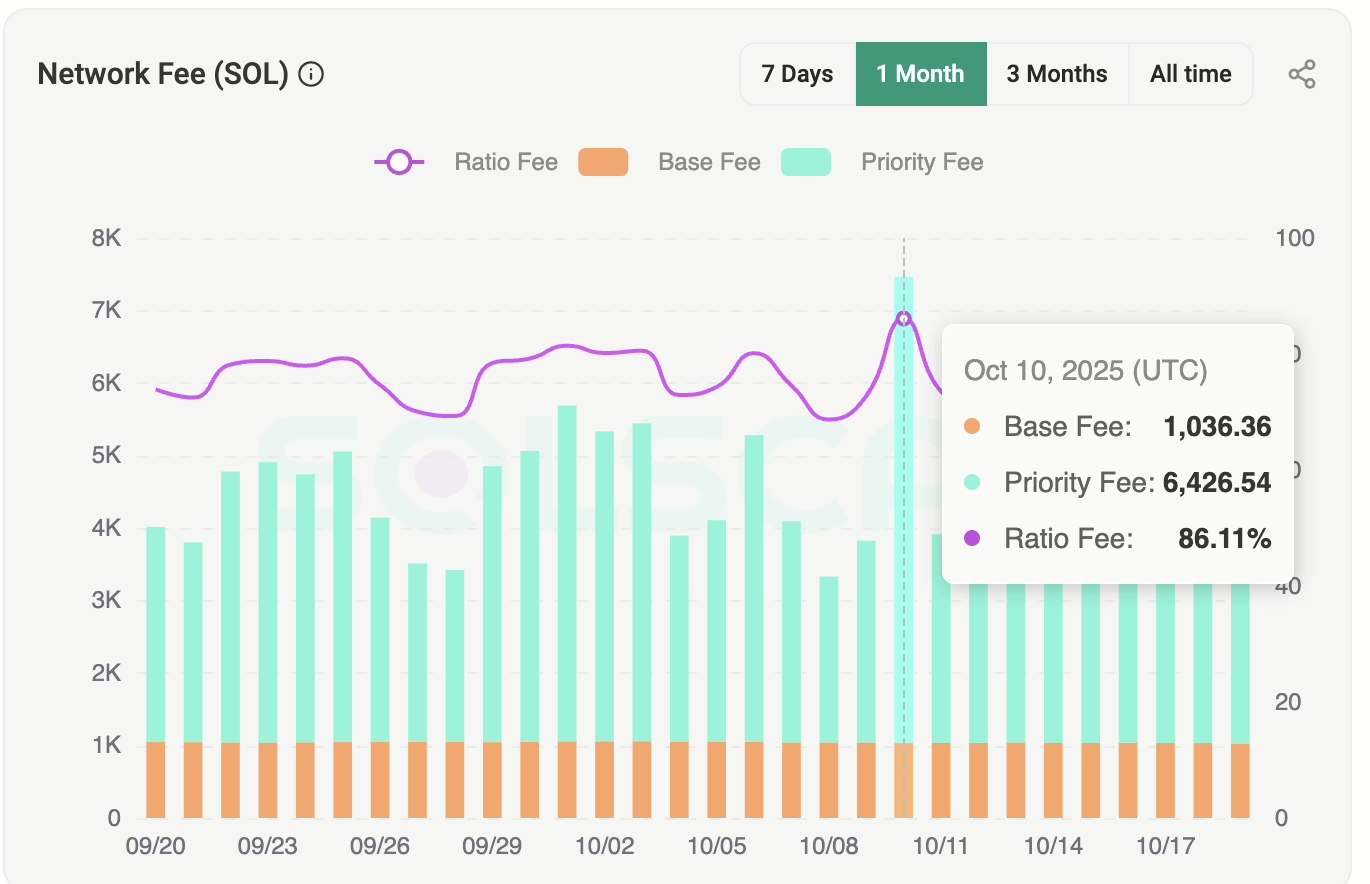
Notably, though, users had to pay a little more than Solana’s base $0.0005 fee to get transactions through. Hence, Solscan data shows a notable fee spike on October 10. Solana network users paid 7,462 SOL (approximately $1.5 million) in fees, around 30% of the amount spent by Ethereum users. Priority fees accounted for over 86% of that amount.
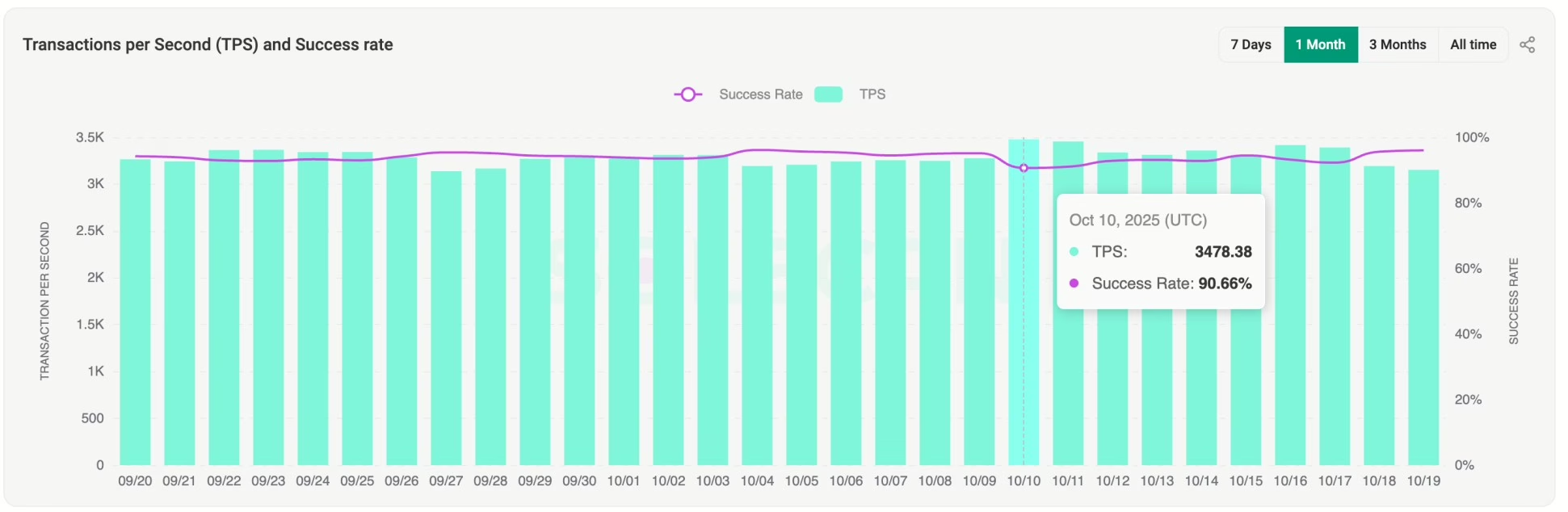
Meanwhile, the network processed over 3600 transactions per second with more than 700 non-vote transactions. These transactions had a 90% success rate on October 10, a typical range on the network even during periods of less traffic. As a result, there is no notable difference between the market crash and a usual day on the network.
Unsurprisingly, many Solana-based protocols, including Kamino, Drift Protocol, and Jupiter were quick to report that everything functioned as usual even as markets crumbled. This uptime was more eye-catching given that popular centralized trading venues like Binance and Coinbase struggled during the event.
Solana vs AWS Outage
The Solana ecosystem was less impacted by the AWS outage, with key DeFi protocols remaining fully functional. The relative peace evidently stems from Solana’s unique design and its independence from the EVM, which powers Ethereum and most of its layer-2 ecosystem.
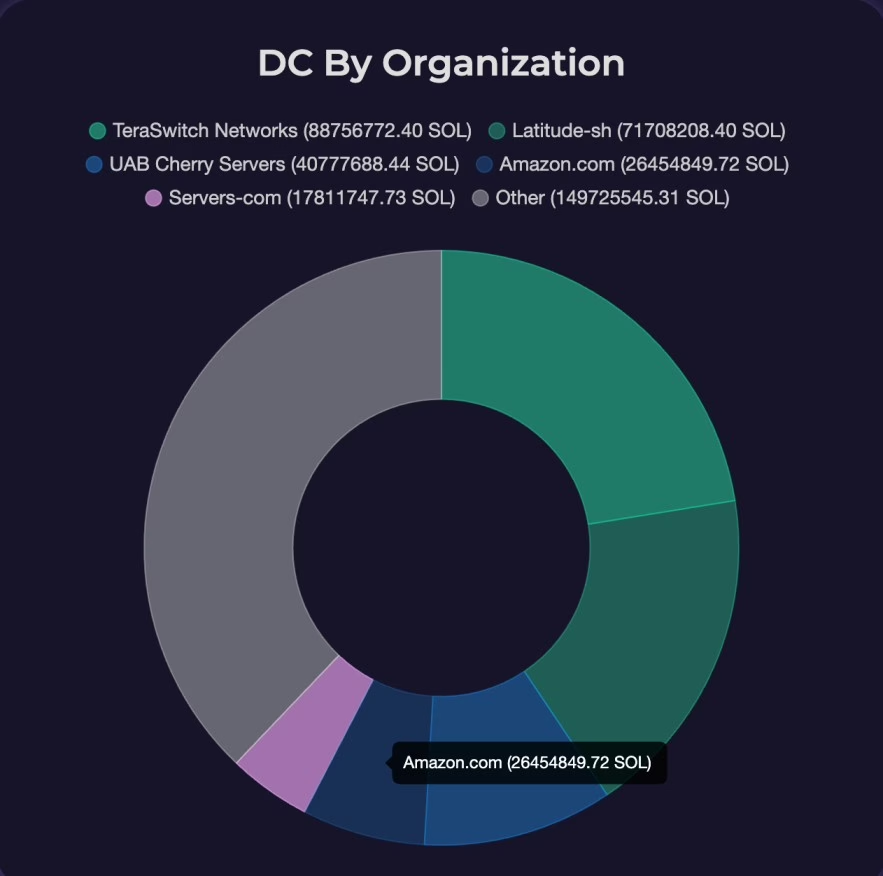
Additionally, data shows that only around 10% of Solana’s validator stake uses AWS. The network enjoys a significant level of decentralization in this respect, but must remain wary of such an outcome playing out in the future.
BNB Chain
The past few months have seen renewed interest in the Binance-backed BNB chain. The network has seen an influx of memecoin and DeFi activity, and thus earns a place in this post-mortem.
BNB Chain did not suffer any notable liveness issues during the recent market crash or AWS outage. However, transaction fees collected by the network on October 10 amounted to 4185 BNB (approximately $5 million), making it the biggest fee earner on that date. The network collected even more fees on the day before, as the chart below shows, with the average typically being around 2500 BNB ($3 million daily).
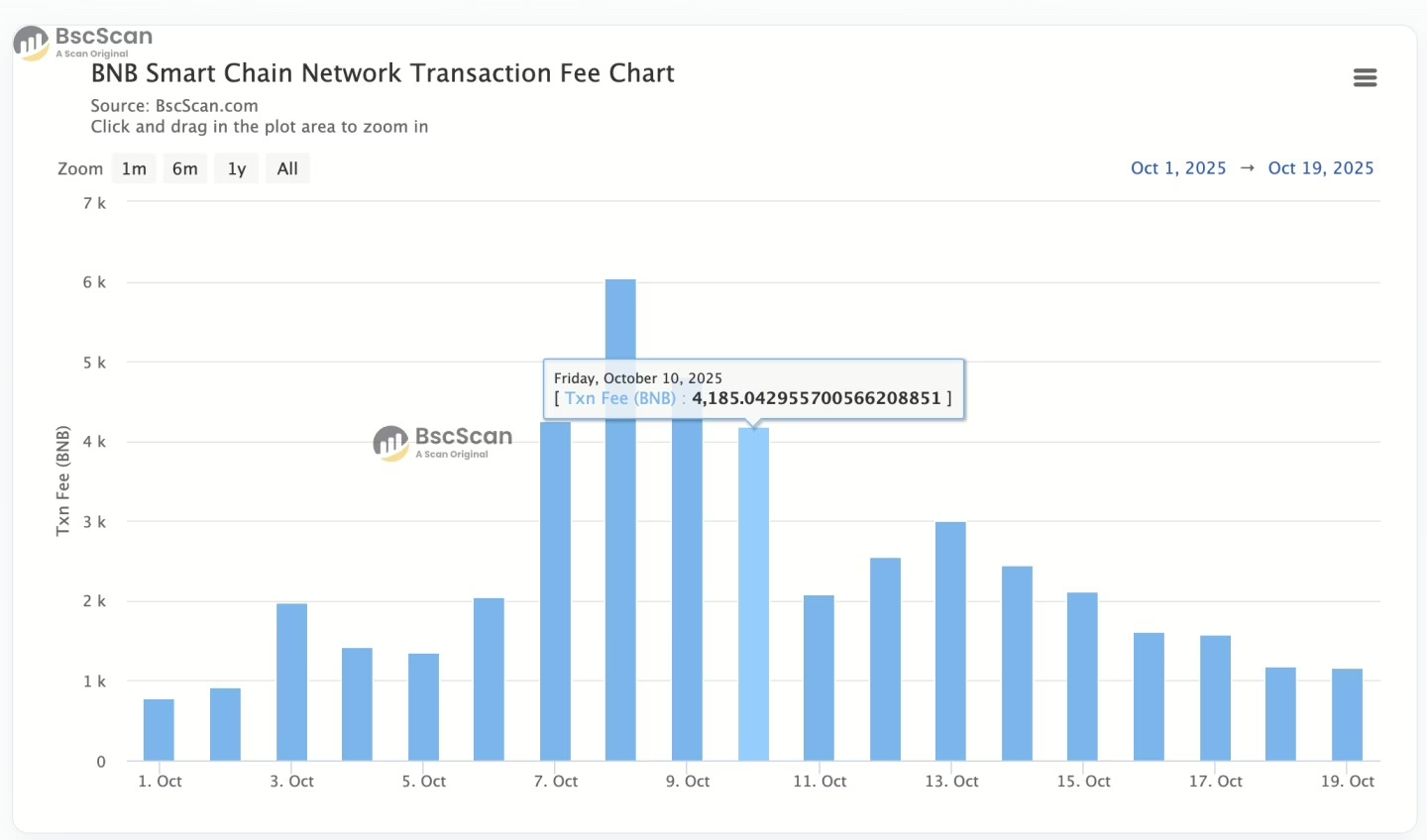
Nonetheless, it is worth noting that fees remained relatively low, with users paying an average cost of $0.18 even during peak hours on October 10.
Layer-2s: Base, Arbitrum, and Optimism
Base
The Coinbase-affiliated layer-2 blockchain Base had its share of network disruptions during the two black swan events. Overall, Base had no sudden network outage due to the October 10 market crash. Still, it experienced congestion.
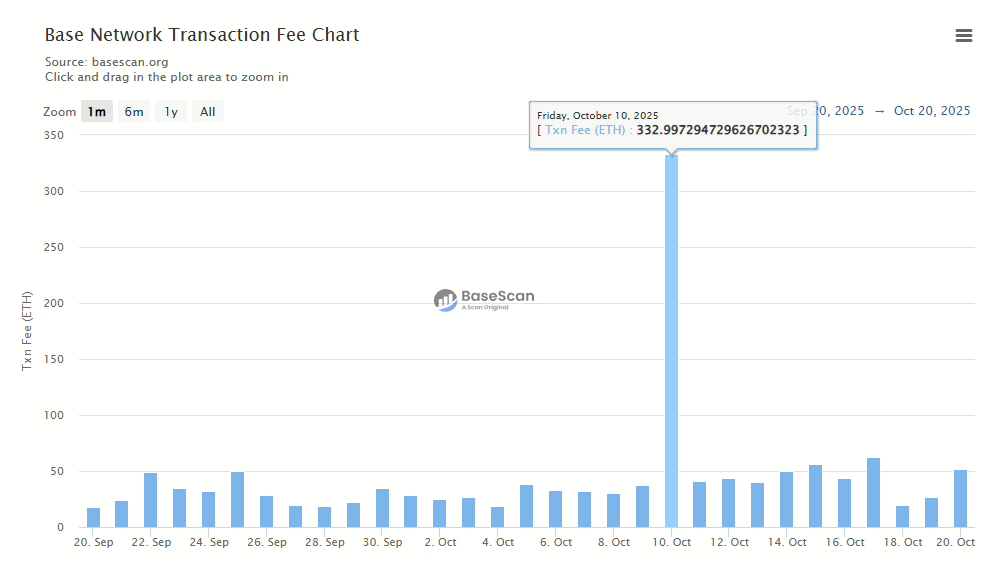
On October 10, Base experienced a safe head delay, a waiting period used to verify that a transaction is genuine and irreversible, for approximately three hours due to high transaction volume. This reflected on the network’s transaction fees, which soared significantly to 332.997 ETH. Notably, this is the highest-ever that the L2 blockchain has seen in a single day since its inception.
Base vs AWS Outage
Base’s ties with Coinbase have earned it massive attention in the Ethereum layer-2 ecosystem. Still, what appears to be a blessing has turned out to be one of its major drawbacks. Base’s network sequencer, a crucial component that orders transactions, is operated solely by Coinbase. Additionally, the L2 network’s infrastructure relies on the same centralized cloud services from AWS, which Coinbase uses.
Hence, it is no surprise that Base took a hit when the AWS outage occurred. As a result, the network’s mainnet suffered high RPC and transaction inclusion latencies. There were also inconsistencies in block production times. This incident has raised questions about its decentralized state.
Arbitrum
Arbitrum, another renowned Ethereum layer-2 network, experienced no major downtime in its operations at the peak of the October 10 liquidations. According to its Status page, Arbitrum recorded 100% uptime in Arbitrum One, its general-purpose chain, and other supported chains, such as Nova. Still, the L2 blockchain experienced a network congestion, taking its total fees in ETH to over 465.1 ETH (over $1.8 million).
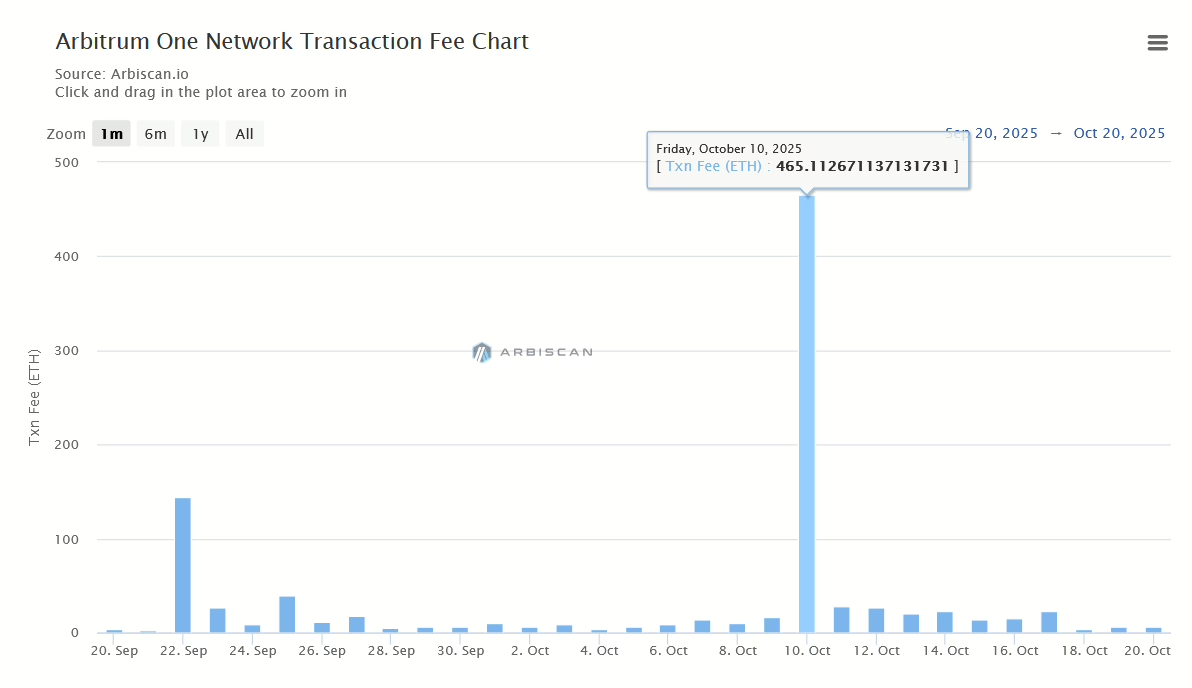
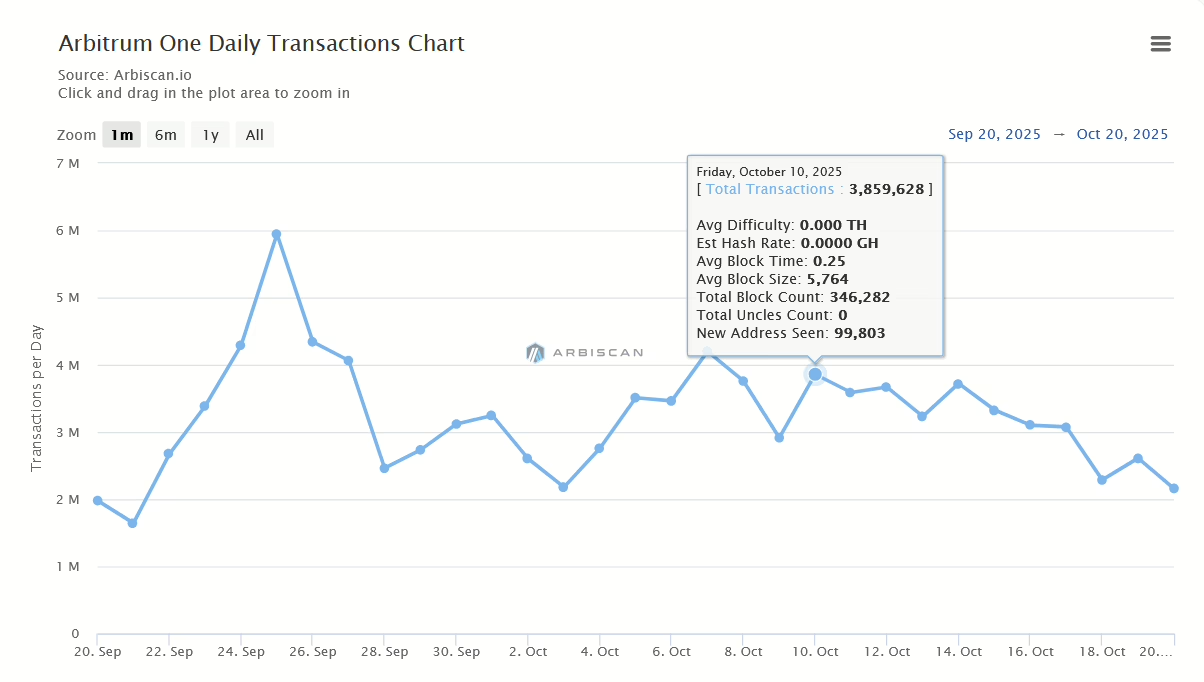
It is worth noting that Arbitrum processed over 3.85 million transactions on October 10, which is significantly fewer than the daily transactions the blockchain handled on other days during the month. This indicates that a smaller number of wallets collectively spent over $1.8 million on fees that day. Evidently, some users had to pay exorbitant fees to complete trades. Some users even reported spending as much as $100+ on transaction fees.
Arbitrum vs AWS Outage
The AWS outage did not directly impact Arbitrum’s functionality. The blockchain’s status was 100% throughout the downtime. Still, the L2 network owes a portion of its infrastructure to AWS’s cloud computing technology. Hence, due to its ties with AWS, it remains at risk of experiencing downtime issues.
Optimism
Optimism is another L2 network that has proven strong despite the October 10 crash and AWS outage. During the market crash, the L2 blockchain handled its highest-ever daily transaction record, numbering over 2.9 million. This had a ripple effect in the network’s fees, which totaled 56.883 ETH (approximately $220,478). In other words, fees were relatively stable in the Optimism ecosystem.

Optimism vs AWS Outage
Optimism’s liveness was not compromised throughout the AWS outage, as evidenced by the L2 network’s Status page. However, like other Ethereum L2s, Optimism has ties with AWS. This questions its decentralized state.
Final Thoughts
Significant stress tests, such as those witnessed this month, play a substantial role in improving the global infrastructure and tooling for public blockchains. As is evident from this report, much work still needs to be done to improve user experience during periods of peak traffic demand. The Solana ecosystem appears one step ahead at this time, with Ethereum and EVM-based platforms having much more work to do in the coming weeks and years.
Co-authored by Mishael Nwani
Get Trending Crypto News as It Happens. Follow CoinTab News on X (Twitter) Now




 Faith | March 9, 2026
 Ephraim Emmanuel | March 9, 2026
 Mishael Nwani | March 9, 2026
 Jonathan Agozie | March 9, 2026
 Chris Lion | March 9, 2026