
The cryptocurrency market has been experiencing a decline over the past few months. The market came under pressure as the apex coin, bitcoin, dropped to its lowest levels in more than a year.
Following the latest tumble, bitcoin is down more than 45% from its October peak. This downturn has sparked fears of a crypto winter, with several analysts confirming that we are, in fact, already in a crypto winter.
But what exactly is a crypto winter and what causes it? This article will provide a detailed breakdown of how to identify a crypto winter and explore some of the notable winters in the industry’s history. Ultimately, we will consider how investors can survive the winter storm and prepare themselves for outsized gains once the cycle is over.
What is a Crypto Winter?
A crypto winter is a prolonged period of market downturn. It is characterized by sharp drops in asset prices, decreased investor sentiment, and reduced market activity for several months or even years. Interestingly, the term itself was first used during the 2018 bitcoin crash, which wiped away over 80% of the asset’s value.
Notably, a crypto winter is not the same as a bear market. While both terms are comparable and can happen at the same time, they are not exactly the same.
A bear market occurs when the price of an asset declines by 20% following a recent market high. However, in a crypto winter, asset prices drop by more than 40% and the market remains stagnant for a longer period.
Historically, crypto winters have been triggered by several factors, including macroeconomic changes, major security breaches, and speculative bubbles bursting. Additionally, decreased institutional interest and extreme market volatility could further worsen the crash.
Notable Crypto Winters in History
Depending on who you ask, the crypto industry has seen between three and five crypto winters. However, market analysts believe that crypto winters typically last 13 months from peak to trough.
Thus, let us now consider some of the crypto winters that have shaped the trajectory of the industry.
2014–2015 Mt. Gox Crash
The crypto industry saw its first notable winter in early 2014. Mt. Gox, the largest crypto exchange at the time, handling more than 70% of global BTC transactions, suffered a catastrophic hack. A whopping 850,000 BTC was lost in the hack.
The fallout was immediate. As investors’ trust in the market eroded, bitcoin’s price plummeted. The apex coin crashed to $170 from $1,100 in the roughly 14 months that the winter lasted, losing 85% of its value.
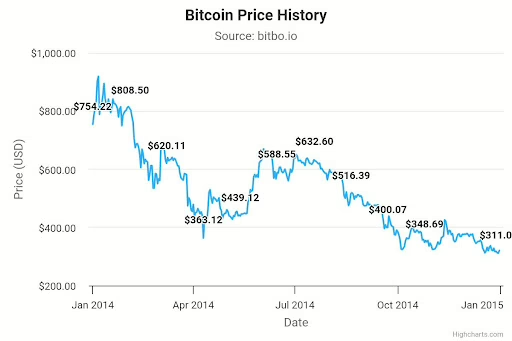
However, as newer exchanges with stronger internal controls and audit functions emerged in 2015, the market slowly rebounded. Additionally, ETH made its debut into the crypto industry with an initial coin offering (ICO), which would later set the stage for the 2017 bull run.
2018–2019 ICO Bubble Burst
Following the ICO boom in 2017, the crypto market recorded a surge in capital influx, resulting in a rally. Bitcoin surged to nearly $20,000 in December of that year.
However, the industry was still considered the wild west, with very little regulatory oversight. So, when China, the US, Canada, and South Korea cracked down on the market in early 2018, the ICO bubble burst, and a second winter arrived as prices came crashing down.
During the 2018–2019 downturn, bitcoin fell approximately 83% from peak to trough, plunging from $19,800 to around $3,200. The downturn continued until late 2019 when bitcoin rose to $10,000.
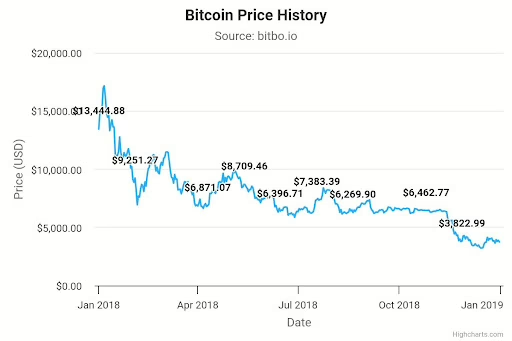
Then the COVID-19 pandemic struck, erasing all the gains by early 2020. As investors panic-sold, bitcoin plunged 50% in one day, sparking speculation of another winter. However, the market gradually recovered, and by December 2020, bitcoin was on its way to a new all-time high.
2022–2023 Terra-LUNA Collapse
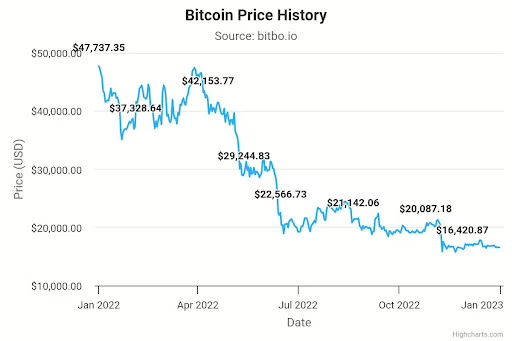
The 2022 crypto winter is largely regarded as the most brutal, with the market losing more than $2 trillion that year. The crash was triggered by several macroeconomic factors, with the Russia-Ukraine war affecting global markets. Additionally, high inflation rates in the United States resulted in aggressive rate increases by the Fed.
The bankruptcy and collapse of FTX and its stablecoin Terra was the final nail on the coffin. The company’s ties to several major crypto companies, including Three Arrows Capital, Voyager Digital, and Celsius Network, further increased the impact of the crash.
FTX’s collapse rocked the entire digital asset industry, pushing several coins off the edge. Bitcoin fell by over 77%, dropping to around $15,000 from its 2021 peak of $69,000. Several other coins recorded significant drops, with ETH and SOL falling 73% and 94% respectively. This winter lasted well into late 2023.
2025–Present
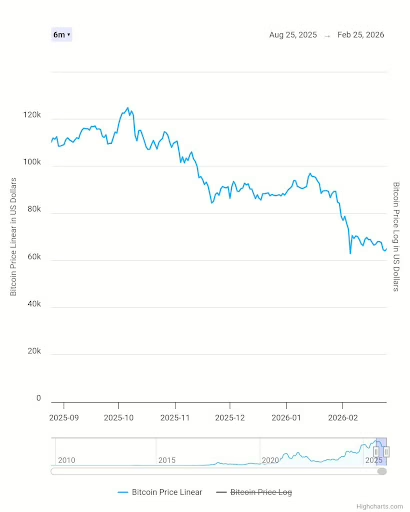
Several market analysts believe that the crypto market is currently in a winter. Following bitcoin’s rally to a new record high above $126,000 in October 2025, the asset has been on a steady decline.
Earlier in February, bitcoin plunged to its lowest level in over a year. The asset’s price dropped to $60,000 and has been hovering around that range. With the recent drop, bitcoin is currently down by more than 50%, Ethereum by over 57%, and many other crypto assets have fared even worse.
The current winter cycle has been triggered by several factors. Bitwise’s CIO, Mark Hougan, noted that some of these triggers include excess leverage and widespread profit-taking by several early investors. Additionally, institutional demand has reversed, with crypto funds consistently recording outflows for several weeks.
Notably, all previous winter cycles were subsequently followed by strong recoveries. Post-winter rebounds saw bitcoin soaring above 80% from trough levels.
Several prominent crypto analysts believe that the current winter cycle will be shorter than the previous ones. So, while we wait for the recovery phase, let’s see how you can weather the storm.
How to Survive a Crypto Winter
Granted, it is impossible to predict exactly when a crypto winter will start or end. But you can get prepared to survive the winter storm and set yourself up for massive gains when the cycle is finally over.
Here are five powerful strategies that can ensure your success in the current winter.
Accumulate Strategically
While winters and the lower prices they bring can be painful, they also offer investors an opportunity to accumulate more assets at a discount. One tested and trusted method to do this is DCA.
Dollar Cost Averaging (DCA) is an investment strategy where someone invests a fixed amount at regular intervals. This strategy aims to reduce the impact of market fluctuations. By consistently investing a fixed sum, you can avoid lump-sum entry mistakes, where the “dip” continues “dipping”.
Time in the market beats timing the market
Moreover, DCA ensures that you buy more coins at lower prices during periods of prolonged downtrend, when fear is highest. Thus, while others are timing the “perfect dip” to purchase, you consistently accumulate weekly or monthly, regardless of price.
Manage Risk
Preserving your capital during a crypto winter is more important than chasing gains. Thus, you must endeavour to set up a strict risk management system and follow it religiously.
Implement portion sizing rules with a defined maximum risk threshold. Always remember the age-old investment advice to never risk more than you can afford to lose.
Crypto winters are notorious for liquidating overleveraged investors. Avoid high-leverage perpetual positions as they amplify losses in volatile markets.
Additionally, limit emotional decision-making. If a trade goes wrong, do not try to double down. Bear your losses and move on while you still can. Of course, it is never a good idea to borrow simply to try to recover losses.
The same is applicable for gains. Set a clear and realistic target return and cash out immediately. Many traders have missed out on massive profits by riding their winning trades “to the moon” until they break. Remember, it’s not your money until you cash it.
Prioritize Quality Over Hype
Historically, crypto winters are known to weed out projects with weak fundamentals. Statistics reveal that many speculative tokens never return to their previous highs. Most of the top crypto projects in the market, including Solana and Uniswap, were survivors of previous winters.
This is not the time to chase hype. Avoid projects that are solely driven by narrative and hype without fundamentals. Do your own research before investing in any project. If it sounds too good to be true, it probably is.
Regularly evaluate your holdings and reduce exposure to weak balance-sheet projects. Focus on projects with strong ecosystem activity.
Diversify Your Earnings
Spread out your holdings to include blue-chip assets, including BTC and ETH and stablecoins to reduce volatility. You can also include revenue-generating assets to participate in staking and yield farming.
Since crypto winters are marked by little market activity, you can stay afloat by exploring other low-risk opportunities to boost your earnings. You can opt to provide liquidity for decentralised exchanges (DEXs), which allows you to earn income beyond price speculation.
It is also wise to expand your investments outside the crypto industry. This way, you do not risk losing all your money if the market plunges further.
Stay Informed
Staying updated with the latest developments in the industry is one of the most important things to do during a crypto winter. It allows you to quickly identify investment opportunities and make smart decisions.
There is a caveat, though. The crypto industry is currently rife with overflowing information and self-proclaimed crypto experts. Ensure that you are getting information from reliable sources. Verify all information and avoid getting tempted by unrealistic offers. Stick to news sites that provide the latest, unbiased information about the industry, like Cointab.
Be Patient
Ultimately, patience is required to survive a crypto winter. This period can be challenging even for the most optimistic investors, especially as it often tends to last longer than expected. This becomes even more difficult for investors with a significant allocation of crypto assets.
However, patience will help you make level-headed decisions regarding the right cryptocurrencies to pick and HODL them. It also helps you to avoid getting tempted by offers that appear too good to be true.
Despite how cold the current winter gets, remember that it is not a market failure. Instead, it is a structural phase of the crypto market cycle that serves as a cleansing mechanism. While crypto winters have historically been brutal in the short term, they have also created the foundation for every major bull cycle in the crypto industry.
Conclusion
Crypto winters can be difficult to navigate, but applying the tips in this article will better equip you to stay afloat during this market cycle. The objective during a crypto winter is not to aggressively chase profits. Rather, it is to strategically accumulate quality assets while preserving capital.
Only those who survive by managing risk and maintaining discipline position themselves for exponential gains when the cycle turns. Remember, no winter lasts forever. Spring is coming, and several veteran analysts believe it will arrive sooner than you think.
Get Trending Crypto News as It Happens. Follow CoinTab News on X (Twitter) Now








 Chris Lion | February 26, 2026
 Sampson Gideon | February 26, 2026
 Jonathan Agozie | February 25, 2026
 Faith | February 25, 2026