A fake Hyperliquid app is targeting users of the Google Play Store. Self-proclaimed blockchain detective ZachXBT was the first to sound the alarm about the malicious app via Telegram. The warning included a link to the bad actor’s wallet address, which currently holds over $285,600.
How to Spot the Fake Hyperliquid App
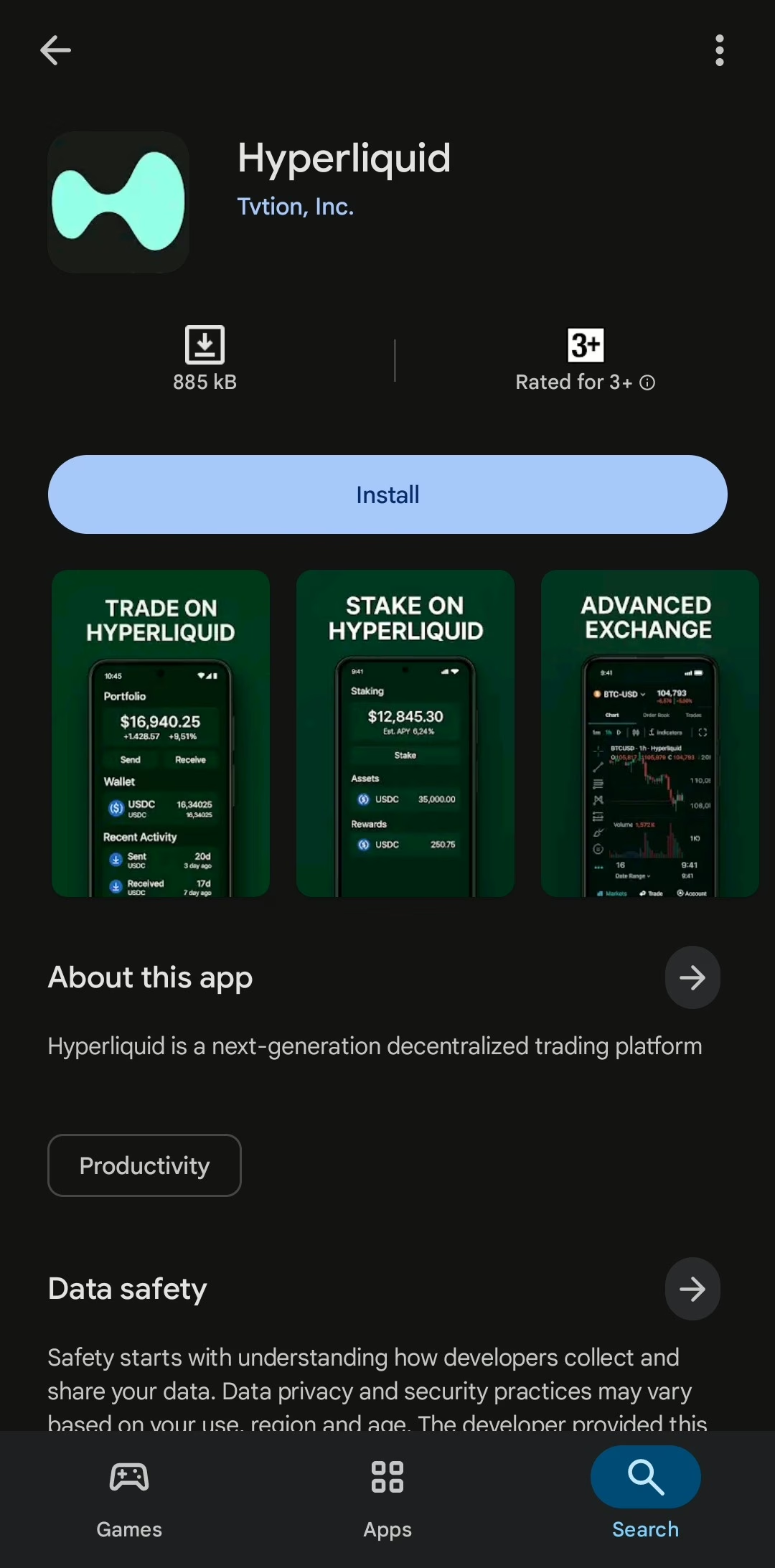
For one thing, the Hyperliquid team does not have its own mobile app available on either the Google Play Store or Apple’s App Store. Like most decentralized applications (dApps), Hyperliquid is accessible solely through Web3 wallets, with a browser feature supporting dApps. This means that, until the project announces an official mobile app, any so-called mobile interface posing to be Hyperliquid is fake.
Notwithstanding, there are various ways to identify a fake app, such as the illicit Hyperliquid app. One is the developer behind the platform. In this case, “Tvtion, Inc.” is behind the malicious app. Another is the developer’s email, which in this case is “[email protected].” Other things to look out for are its file size, age rating, and reviews.
Luring users to a fake Hyperliquid app is not a difficult feat for these malicious actors. This is due to the dApp’s prominence in the crypto market. In just a year, Hyperliquid emerged as one of the leading decentralized perpetual trading platforms. It offered numerous features that made it stand out from centralized crypto futures platforms. For example, it operates on its own layer-1 blockchain, offering higher leverage and lower fees.
It is currently uncertain whether the malicious actor got the entire $285,600 loot from victims using the fake Hyperliquid app. If the funds came from the scam app, then it means the bad actor has been extorting users for a month.
Other Scam Apps
This is not the first time that malicious actors have deployed scam apps impersonating crypto apps to extort unsuspecting users. Last month, Apple users identified and reported a fake app posing as Jupiter Wallet.
Pinpointing that the teams behind app marketplaces like App Store and Play Store are not curbing these malicious platforms, ZachXBT said:
“None of these platforms seem to do a good job of filtering these scams out.”






 Ephraim Emmanuel | June 17, 2026

 Jonathan Agozie | June 15, 2026