Few token launches have generated as much attention this week as Arcium’s ARX.
The token surged more than 250% within 24 hours of launch and recorded hundreds of millions of dollars in trading volume. It also secured listings across major exchanges, including Binance Alpha, Coinbase, Upbit, and Bybit.
While the price action grabbed headlines, the story behind Arcium runs much deeper than a successful token debut.
The project is attempting to solve one of blockchain’s most difficult challenges: enabling computations on sensitive data without exposing the data itself. As privacy concerns grow and artificial intelligence becomes increasingly data-driven, Arcium believes confidential computing could become a critical layer of future blockchain infrastructure.
Building an Encrypted Supercomputer
Arcium describes itself as an encrypted supercomputer built on the Solana network.
The network allows applications to process encrypted information while keeping the underlying data private. This approach opens the door to use cases that would otherwise be difficult or impossible on traditional public blockchains.
Potential applications include confidential AI systems, privacy-preserving DeFi protocols, secure data marketplaces, and enterprise-grade blockchain solutions.
The project has attracted backing from several well-known names in the industry, including Jump Crypto and Coinbase Ventures, giving it credibility before its token launch.
A Launch That Captured the Market’s Attention
When ARX launched on June 22, the market responded immediately.
The token climbed more than 250% from its initial launch levels as demand poured in from participants eager to gain exposure to the privacy and AI narrative. As per CoinMarketCap data, the token opened at approximately $0.13 at launch and initial highs reached near $0.40–$0.47.
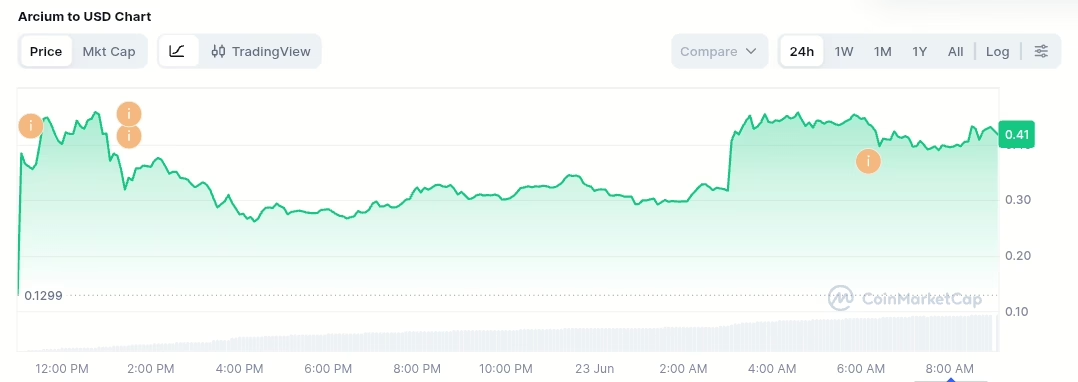
Volume quickly climbed into the hundreds of millions of dollars, helping ARX become one of the most discussed new assets across crypto social media.
Like many new launches, the rally was followed by periods of profit-taking and price discovery as buyers and sellers established a market value for the asset. The token currently trades around $0.25, down 18% over the past 24 hours.
Even so, the launch remains one of the strongest infrastructure token debuts seen this year.
The Whale Concentration Debate
As traders celebrated the launch, on-chain analysts began examining the token’s ownership structure. The findings revealed a highly concentrated supply.
On Solana, approximately 89% of the token supply is controlled by just 17 whale holders. On-chain data shows that five of the top six ARX holder wallets are linked to Magna Digital. The two largest wallets belong to the firm, holding approximately 271 million and 210 million ARX, respectively.
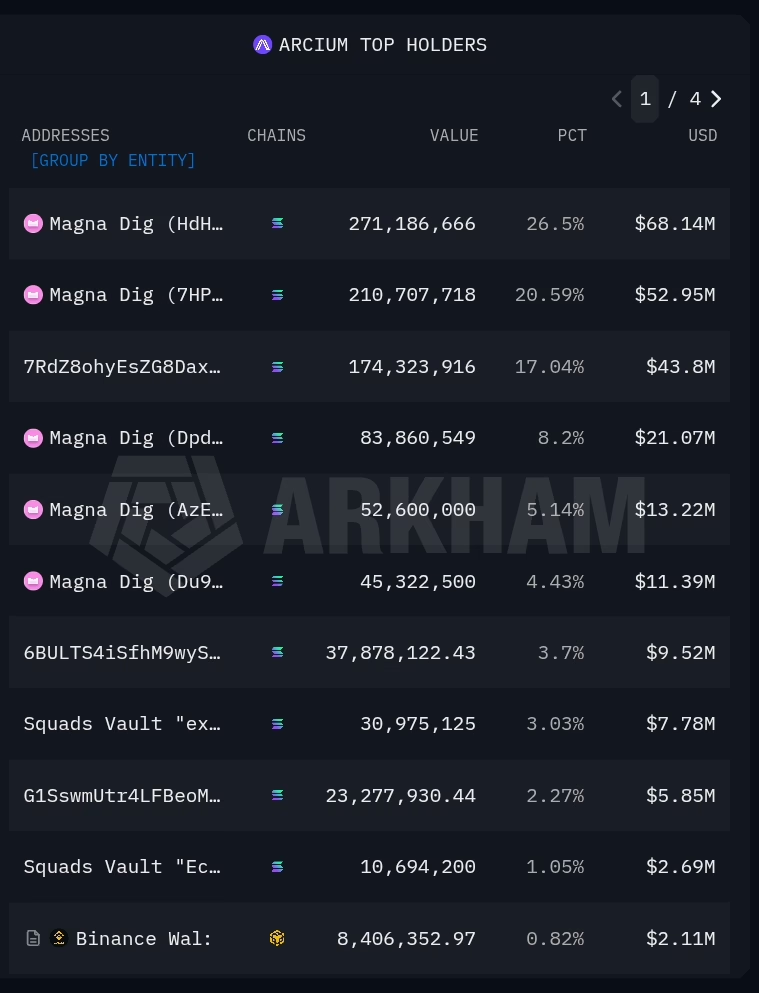
The pattern is similar on the BNB Chain, where 23 whale holders control roughly 89% of the supply. Binance represents the largest holder on that network with approximately 8 million ARX.
Supply concentration often raises concerns because a small number of entities can potentially influence market dynamics through large transfers or sales. However, early-stage infrastructure projects frequently exhibit similar ownership structures due to treasury allocations, vesting schedules, ecosystem funds, and strategic investor holdings.
For Arcium, the concentration story is important, but it is not necessarily unusual.
CoinList Participants Were Early Winners
Before the public launch, Arcium conducted a community sale through CoinList.
Participants purchased ARX at $0.20 per token under a fully unlocked allocation representing 2% of the total supply. When ARX surged significantly above the sale price, many early participants immediately found themselves in profit.
Consequently, this created predictable selling pressure as some holders secured gains while others chose to maintain long-term positions. Such behavior is common following token generation events and often contributes to early volatility.
Understanding ARX Utility
Unlike many newly launched assets, ARX has a clearly defined role within its ecosystem.
Node operators must stake ARX to provide confidential computing services across the network. The token also serves as the primary governance asset, allowing holders to participate in protocol decisions.
Interestingly, network computation fees are paid using the native asset of the underlying blockchain, such as SOL. This design allows ARX to focus on securing the network and coordinating governance rather than acting as a payment token.
Tokenomics and Future Unlocks
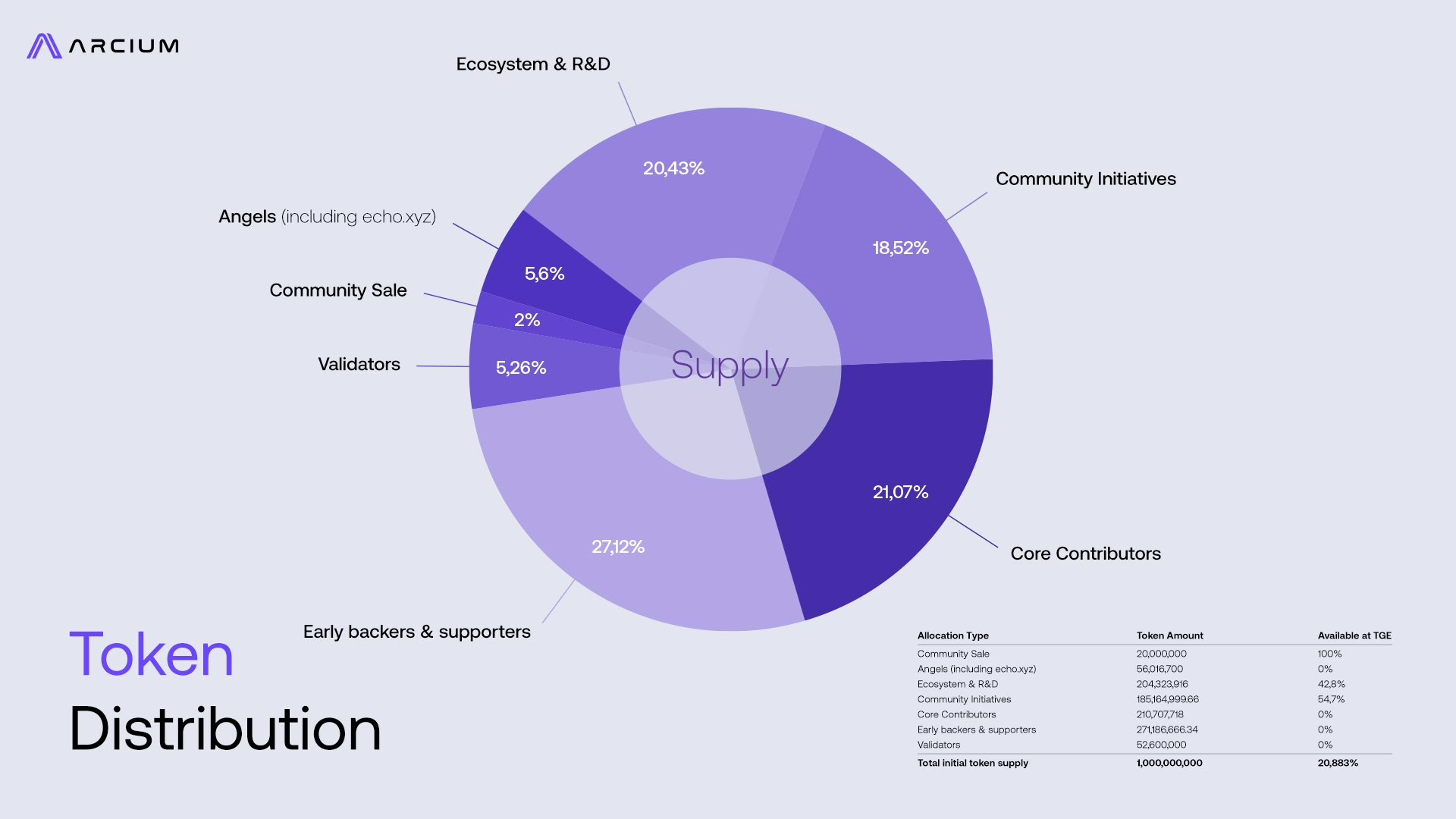
Arcium launched with a fixed supply of one billion ARX. Only about 20.88% of that supply was circulating at launch, leaving the majority locked under long-term vesting schedules.
Meanwhile, key allocations include community initiatives, ecosystem development, research and development, core contributors, and early backers.
In addition, most of the locked supply is subject to a 12-month cliff followed by gradual linear unlocks. As a result, this structure helps reduce immediate dilution but also means future vesting events could influence market behavior.
Risks and Opportunities Ahead
Arcium enters the market with several advantages.
The project sits at the intersection of privacy, AI, and blockchain infrastructure, three themes that continue to attract significant attention across the industry. The team also benefits from strong backers, substantial funding, and a technology stack that addresses a real problem.
At the same time, challenges remain. Supply concentration, future unlocks, competition in confidential computing, and broader market conditions are all factors that could influence the project’s trajectory.
Ultimately, success will depend on adoption rather than speculation.








 Ephraim Emmanuel | October 14, 2026